Quick Links:
- Check out our conversation on Jordan’s YouTube channel: https://www.youtube.com/watch?v=rOUJ9exfVjw&t=27s
- Index of all my appearances and interviews: AllMyLinks.com/IsaacW (Rumble/YouTube, social media, signed books, audiobooks, shirts & more)
- I’m back on YouTube! https://www.youtube.com/@occultsymbolism (*Supporter feeds Tier 2 members get videos with early access, no ads)
- CopyMyCrypto.com/Isaac is where you can copy James McMahon’s crypto holdings- my listeners get access for just $1!
LISTEN TO THE FREE FEED VERSION OF THE SHOW HERE:
Listen to the free feed version of the show on the Apple Podcasts or Spotify, or any of the podcast apps- I’m on just about all of them (**and don’t forget to leave your reviews there as well!!**); or right here on the embed (*if you’re looking for one of the ad-free SUPPORTER feeds you’ll have to stream it through their respective apps):
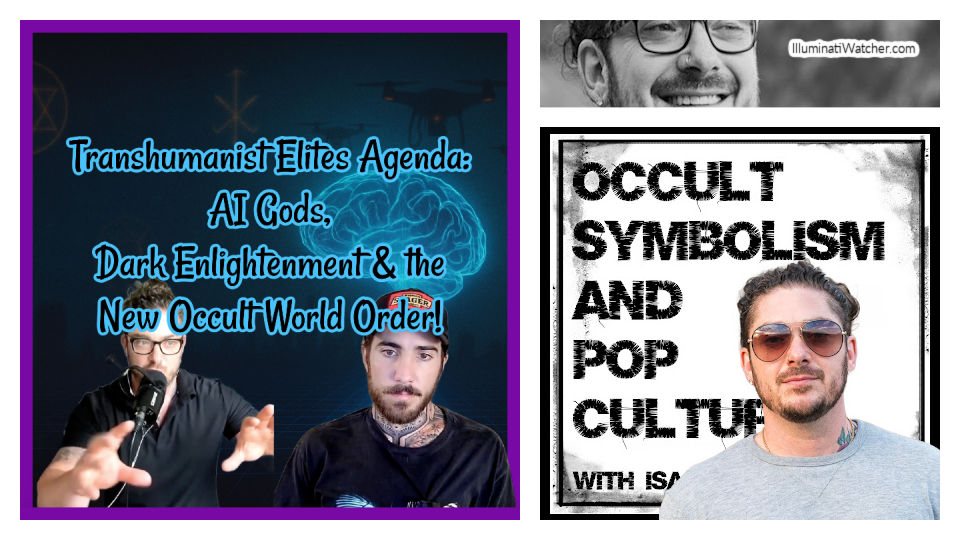
On today’s episode of the Occult Symbolism and Pop Culture with Isaac Weishaupt podcast we have an appearance I made on Jordan Ryan’s “A Mind Body Mushroom” podcast that I know you’ll want to hear: “Isaac Weishaupt joins Jordan Ryan to discuss technology, AI, and veteran wellness. They explore dark enlightenment, conspiracy theories, and gnosticism, examining transhumanism and societal control. The episode touches on the Great Reset, American enlightenment, and accelerationism’s societal impact. They discuss Silicon Valley’s influence, occult practices, AI consciousness, wealth disparity, and capitalism. The conversation includes hyperstition, meme magic, extremist ideologies, and cultural implications of a potential police state, concluding with reflections on AI, science fiction, and religious end times.”
NOW UP AD-FREE ON SUPPORTER FEEDS!
Links:
- Check out Jordan’s “A Mind Body Mushroom” Podcast: https://podcast.windanseacoffee.com/episodes
- Check out our conversation on his YouTube channel: https://www.youtube.com/watch?v=rOUJ9exfVjw&t=27s
- Check out Jordan’s AMAZING Windansea Coffee! https://windanseacoffee.com
- I’m back on YouTube! https://www.youtube.com/@occultsymbolism (*Supporter feeds Tier 2 members get videos with early access, no ads)
- ISAAC’S ONE STOP SHOP- Rumble/YouTube, social media, signed books, audiobooks, shirts & more: AllMyLinks.com/IsaacW
- SUPPORTER FEEDS: Go ad-free with HUNDREDS of bonus episodes, early access and books!
- Patreon.com/IlluminatiWatcher,
- VIP Section (*with comparsion of Apple vs Patreon vs VIP): https://wp.me/P2ijVF-aRL
- Apple Podcasts Premium! You can now go ad-free with ALL the bonus episodes on the Apple app- just open up the podcast and subscribe!
Support the show: 1. SUBSCRIBE! 2. Leave a review! 3. Go commercial free with bonus content by supporting the show on any of the THREE platforms!
(*Full transcript of the show will be at bottom of this post, scroll all the way down!!!)
Today’s show is brought to you by my books on Audible! If you want to support the show search for “Isaac Weishaupt” on Audible or hit this link to get my most popular book- THE DARK PATH!
How to Support the show:
- SUBSCRIBE!
- Leave a review!
- Go commercial free with bonus content by getting in the VIP Section, Patreon or Apple Premium!
You can search through to the ENTIRE catalog going back to 2014 at this convenient post I created:

Thanks again for all your support! If you want to stay connected please sign up for my free email newsletter which will get you updates on all groundbreaking revelations of occultism in entertainment (as well as occasional free giveaways)!
-Isaac
*When you sign up for my email updates you’ll get a FREE copy of my first full length book: A Grand Unified Conspiracy Theory: The Illuminati, Ancient Aliens and Pop Culture! Sign up here:

Isaac Weishaupt is a prominent author, researcher and host of the Occult Symbolism and Pop Culture podcast since 2014, where he explores the hidden meanings behind pop culture, conspiracies and esoteric philosophy. With a background in engineering and a deep interest in occult systems, Isaac bridges the gap between mainstream entertainment and the arcane by decoding the symbols, rituals and belief systems woven into films, music and celebrity culture. He’s written several books on Illuminati symbolism, occultism, secret societies and the paranormal. Drawing on a mix of research, intuition and cultural analysis, Isaac offers a critical yet accessible lens on the forces shaping the modern world from the shadows…
Isaac hosts the Occult Symbolism and Pop Culture podcast (supported by the supporter feeds like Patreon) and “Breaking Social Norms” podcast. He has been a featured guest on Coast to Coast AM, Tin Foil Hat podcast (honorary member of Mount Crushmore), The Confessionals, Eddie Bravo’s “Look Into It,” Ground Zero with Clyde Lewis, Chris Jericho’s “Talk is Jericho,” Richard Syrett’s “Strange Planet,” House Inhabit’s Substack, “Those Conspiracy Guys,” Dave Navarro’s “Dark Matter Radio,” Richard C. Hoagland’s “Other Side of Midnight”, SIRIUS/XM’s The All Out Show, The HigherSide Chats, VICE, COMPLEX magazine, Esquire, Newsweek, The Atlantic and many more radio shows and podcasts. His fresh perspective and openly admitted imperfections promotes the rational approach to exploring these taboo subjects and theories.
Follow Isaac on Instagram: @IsaacWeishaupt, Twitter: @IlluminatiEyes, Facebook: @IlluminatiWatcher, or sign up for the free email newsletter! Signed paperbacks and shirts available at OccultSymbolism.com!
ONE STOP SHOP FOR ALL LINKS: AllMyLinks.com/IsaacW
*STATEMENT: This show is full of Isaac’s useless opinions and presented for entertainment purposes.
Full Transcript (Courtesy of all show Supporters):
*Note that this is pretty accurate- not 100% though. It’s run through software that is generally very accurate and then I give it a quick once over but there are most likely some errors.
[00:00:00] Speaker A: Foreign.
Isaac with the intro to the intro. You know what that means. It’s a special episode. That’s right. Today I’m posting an appearance I made on Mind Body Mushroom podcast with my coffee plug, Jordan from Wind and Sea Coffee.
Not only does he have great coffee, he’s had a great podcast. He’s interviewed several before me. You know, a lot of spec ops guys in the military interviewed an EOD guy named Brandon.
That was an episode that I particularly enjoyed because I was trying to read listen to eod. But anyway, the even recently dropped, he’s doing some solo research projects. Like he recently dropped a Rothschild Epstein Connections show.
And I don’t drop all of my appearances on my podcast feed, but this one was really fun. I wanted to share it with you.
And also quick plug on my link tree allmylinks.com Isaac W. You’ll see I’ve got a link to all my appearances and my interviews that I’ve done and appearances. And this will be on there along with several others, of course, if you’re ever interested. If you’re like, oh man, Isaac, what else have you been on? I like these shows where people interview you. Well, there’s a whole list and index that I build every time I do a new appearance. Right.
So anyway, yeah, today we’re going to drop the, the, the Jordan Mind Body Mushroom podcast interview he did and we’re going to get into this whole discussion about dark enlightenment, transhumanism, Gnosticism, the order of nine Angles, Saturn Severance Hollywood. It’s a good broad exposure to all these topics and things. Right.
So while you’re listening, go follow Jordan on his podcast. He also has a YouTube of this exact conversation. If you want to watch the video version of this, I’m going to toss all those links in the show notes and, and yes, he’s the roaster that roasts the mushroom and noti Watcher Coffee, the smoothest mushroom infused coffee you can find. And he also, he makes a ton of coffee for his own products. You can get those at Wind and c coffee dot com.
The links for that will be in the show notes as well. And I’ll put a link to the YouTube version in the show notes as well. And his podcast, Mind Body Mushroom, if you’re into he, he hits a lot of, a lot of spec ops military stuff. He talks a lot about mental health and wellness, alternative medicines and things like that. Right. So hit those, hit those show notes while you’re listening. Till next time, stay positive.
[00:02:30] Speaker B: All right, welcome back to the Mind Body Mushroom. I’m joined by a guest who’s been pulling back the curtain on the hidden forces shaping our reality for years.
You probably know him as the voice behind occult symbolism and Pop Culture and Breaking Social Norms, two podcasts that dig into the symbolism, narratives, and power structures most people either ignore or dismiss.
Isaac Weishaupt is a researcher, author, and cultural critic who’s been on a massive following, who’s built a massive following for his deep dives into everything from secret societies to celebrity ritualism and how the occult intertwines with media, politics, and technology.
Today, we’re talking about something that touches all of that. The rise of the tech oligarchy in America, the ideology of the dark enlightenment, and accelerationist mindset that are fueling our culture and technological dissent.
This conversation is going to be deep, so buckle up.
Isaac Weishaupt, welcome to the show.
[00:03:31] Speaker A: Hey, Jordan, thanks for having me on your wonderful show. I’ve listened to a few episodes myself, so my pleasure to be here for sure.
[00:03:39] Speaker B: I appreciate that. Yeah, I mean, you’ve been an inspiration in kind of getting into podcasting also. You’ve just been a really good friend through this. We kind of met through, you know, through business, really. Like, I was listening to your show, and we kind of where coffee is sort of the overlap. You’ve been a subscriber to the Mind Body Mushroom, and, excuse me, to wind and see coffee doing mushroom coffee.
And so it’s cool how this medium has actually created, like, a real connection and not just sort of digital.
Everyone says that technology is making us silo further and further into our own echo chambers. So it’s cool to have actually made a real connection and a real friend through it.
[00:04:30] Speaker A: Yeah, thanks. I agree. You know what’s funny is you was thinking about this the other day, and I was like, why do I like this Jordan guy so much? Like, kind of off the rib. I don’t. I don’t. I don’t just chum up to everybody I talk to. And I think it’s because you remind me of my friend Dr. Aneater. Like, you guys are the same aura, the same vibe for some reason.
So I. I don’t know what it is, but yeah, man, I. I’m. I’m sure happy to have hooked up with you. And this has been an example of how technology and the Internet can, you know, it makes our world smaller and can connect us and can do good things.
Right, where. I think that’s where the AI thing comes into play, where AI is a tool that could make our lives Extremely better or extremely worse. I have my opinions about it, but it’s a reflection of our inputs and what we want to get out of it. And I think with these Dark Enlightenment nerds, they want to make it a slave system. They want to make it the new world order. This is everything every conspiracy theorist has ever talked about. I. I think. And it’s. It’s a subject that deserves a fair amount of focus, which is why I’ve done, I think, six or seven episodes on it. I’m writing a book about it.
I need to just sit down and focus. And the problem is, so much happens in the world that I got to maintain the podcast, and I’m like, okay, we got to talk about this thing that happened in Midtown. I’m gonna. I’m gonna be careful with my language, because I know you’re. You’re putting this on YouTube.
[00:06:00] Speaker B: Totally.
[00:06:02] Speaker A: But, yeah, there’s just. There’s a lot going on, and technology is accelerating at a pace, according to Moore’s Law, that it’s. It’s going to change our world fundamentally. Now, I go back and forth on that, as I’m sure we’ll talk about, as we sort of break this down, but I.
Some days I think, oh, my God, this AI is going to become a.
[00:06:22] Speaker B: The.
[00:06:22] Speaker A: A new God and it’s going to kill us all. Then other days I’m like, no, these nerds are just. They watch too many science fiction movies. It’s just like the next iteration of an app, you know? So, yeah, a lot to unpack here for sure.
[00:06:35] Speaker B: Totally. And one thing I forgot to introduce about you is that you’re also an Air Force veteran, and we don’t have to go, like, into your background or anything, but I just wanted to kind of recognize that and thank you for your service. And also, you know, veteran wellness is definitely something that we talk about a lot on the show, so I think it’s an important thing to highlight. And then really quick, I wanted to preface this, and we kind of briefly touched on it offline before we started recording. But, you know, the Mind Body mushroom, we don’t necessarily talk a lot about, like, conspiracy and some of these other things, but I feel like especially this subject, this dark enlightenment subject should be covered and attention should be drawn to it in a. In a serious, like, light. Like, it should be taken seriously. Because if there’s one thing that, you know, people have sort of been gradually waking up for since about COVID is that a lot of these things that were sort of written off as being conspiracy and the people who talked about them were marginalized and sort of, you know, kind of pushed away as like, oh, these are non serious people. This is an oversimplification of a complex world.
And it’s only like dumb people who think this way or, you know. So I think it’s important to demonstrate that not all conspiracies are the same. Every conspiracy should be taken, you know, in an individuated way and you should evaluate it on the own merits of what’s being shown. So I hope that this can maybe help legitimize some of the good research that is done out there. You know, this isn’t like right wing propaganda and it’s very level headed and academic in a lot of ways, research. And I think you are like the absolute expert on specifically this subject, but a lot of subjects.
So the Dark and light, what is it? Give us a little bit of an overview.
[00:08:46] Speaker A: So as you know, I’ve done hours and hours on this topic and I’ve got a rough outline. Hopefully we can get through.
Cool, we can touch on each point. Maybe we can, maybe we can’t. Either way there’s. When we talk about the Dark Enlightenment, there’s a lot of philosophies and terms and people involved that we need to talk about. So I want to cover them. People like Curtis Yarvin, Peter Thiel, Nick Land and what accelerationism means and these kinds of ideas. And then we get into and, and other people have talked about this. You’ll find more and more people sort of waking up to this thing and trying to discuss it. And what’s interesting to me because I focus on the realm of the occult and the hidden and ritual magic and like that kind of stuff which, which blends into New Age schools of thought, which I’m not opposed to sometimes.
And this is where we get into the origins of the Dark Enlightenment, which came from a group called the CCRU who was dabbling into the occult. Main contact with hp, Lovecraftian entities, demons, to inspire them to pursue this thing. And all these years, 20, 30 years later, now AI has come along and Silicon Valley elites are pushing the same ideas. And then there’s all these like fringe splinter groups that are, have vested interest in this accelerationism and that includes these satanic magical groups, Elon Musk. And it touches on ideas of like this weird white supremacy angle that you can find in this. And, and ultimately when we zoom all the way out, we say, well what the heck, why are they doing all this? And the reality is they are pursuing a Golden Age, a New World Order. This is textbook conspiracy. And to talk about going back to the, the military service thing, right? The, that’s where I learned, that’s where I got sort of red pilled in a way because my, my bestie in Korea was like, oh, dude, when we get back to the States, you got to get this book, Bill Cooper’s Behold a Pale Horse.
And this is back in 2001, right? So, so I get back to the States and I went and found it and I’ve got the copy still and it’s got the very controversial section about the protocols of the, you know, who’s from the. You know where’s. That’s now been removed. But Bill Cooper was one of the formative sort of red pill daddies for me.
And you know, you also being a vet, we, we understand that. We take an oath to the Constitution, right? And I, the main point I want everyone to hear is that this dark enlightenment, all these richest Silicon Valley nerds trying to run the show, they want to get rid of that Constitution. It’s absolute treason.
And it, it really pisses me off to see them try to do this.
Especially when like this is. Cue up the Patriot music, the sparse Spangled Banner, Hurry up. No, because it pisses me off because it’s like this country is so great that we made people like Elon Musk and Peter Thiel rich beyond their wildest imaginations. And now they want to sort of shut the door behind them and pull up the ladder and burn it all to the ground because America is so awful and all this, you know, and, and they, and they, they wrap it up in all this other sort of strange ideas that we can talk about. But the, the. To, to talk about the.
I had notes while you were talking. I was like, okay, I want to hit this.
Yeah, so the, the, when you talked about the critiques of the conspiracy theorist movement and stuff, I’ve been, you know, I’ve been part of this community, I would argue, since 2002 when I read Behold a Pale Horse and it was trying to scour the Internet back in the day when that was difficult to do. And then I made it a full time job in a way in 2011 when I started blogging about this. So I’ve been around this community a very long time and I’ve observed behavioral changes that are alarming to me, specifically the QA Non movement, which I’ve been against since day one.
And they, I, I believe they were a psyop from the get go. And I maintain that, and I think it’s becoming more clear by the day that that’s what that was. And, and the whole reason they did that.
When you get into the, the OGs of the conspiracy world, they always tell you that the two party sort of political divide is a distraction in some ways. It’s WWF where they pretend they’re fighting, but then behind the scenes they both are, like, buying and selling stocks and doing all that and hanging out with, with Jeffrey on Jeffrey’s island there, you know, and, and that’s the truth. Right. And, and where, where I try to, like, put my cause. I have, like, socially liberal preferences, but I’m not a Democrat, I’m not a Republican.
There’s some elements of conservatism that I agree with too. So, like, I’m a very moderate middle of the road. I see value in both parties. And I think the key is to sort of not let that pendulum swing too far to one side or the other. Right. And I think that’s how you kind of keep America on the right path.
But our culture pushes extremism through social media, which has destroyed everything because now people have to be more outrageous to get any attention. It’s the attention economy, like everyone says. And the way you maintain attention is by, you know, going on Twitter and calling people the N word and, and like being outrageous and saying crazy controversial stuff.
And it’s sad because now there’s actually back when back in the day, there was no money behind that, but now there is. So now people are just, they’re just rushing to sell themselves out and say gross, disgusting things that are divisive because now there’s a paycheck involved. So I’ve seen a lot of this happen, especially in the Truth or Movement. And, you know, it’s pretty upsetting to me because, like, I, I had to change the name of my podcast because of this. I didn’t have to. I decided to because it got the, the term conspiracy theory became such a red hot word in like, around 20, 21 that I was like, I can’t. I don’t want to lose because I’ve been, I’ve been censored off of every, you know, my tragic sob story. Yeah, sensitive. Everything, everywhere you can imagine. And I like, like you said, I try to pride myself on being this sort of moderate guy. I’ve got a college education, I’ve got a military background. I love this country and I want the best for everybody.
[00:15:34] Speaker B: And, and you’re a diligent researcher. You know, you.
[00:15:37] Speaker A: Yeah, my sources. Right.
[00:15:40] Speaker B: You Read.
[00:15:40] Speaker A: So it’s upsetting.
[00:15:42] Speaker B: Right?
[00:15:42] Speaker A: Like, and I see people like, and I’m not picking on Mark Dice, but like, I’ll pick on Mark Dice. Mark Dice, he’s got a YouTube channel with, I mean, I haven’t checked since probably last year, but he had a channel with a couple million followers. Yeah, like, really gross stuff about celebrities, which, look, I’ll pick on celebrities all day, but like, I’m not gonna call Taylor Swift a skank because it’s like, I don’t know her. I have no idea what she’s about. I just know the symbolism when I talk about that. So, like, it’s just crazy to me that they’ll say I’m bullying people and saying all this nasty stuff to burn down all my channels.
[00:16:14] Speaker B: Right.
[00:16:14] Speaker A: But then other people for some reason get a pass. And I think it’s because there’s a lot of money being exchanged behind the scenes to keep, keep this device.
[00:16:22] Speaker B: I mean, nuance gets lost in the, in the fast paced, you know, competing for attention economy.
And sometimes they let these loud, kind of obnoxious voices, you know, kind of skirt the standards that they would hold everyone else to because there’s a lot of money being exchanged. And I think there’s also another aspect to it that it’s like if you’re really covering the important stuff, like if you’re really kind of like stuff like this in Dark Enlightenment or the Great Reset, which was a big topic during COVID or, you know, Covid in general, some of these things, like there’s. I think there really are power structures that don’t want too many people kind of focusing on, hey, no, no, no, we’re supposed to be arguing about trans swimmers, you know what I mean? Like, that’s gonna, you know, let, don’t, don’t talk about how both the left and the right has tech oligarchs that are, you know, chipping away at the foundational aspects of what American society is so that they can solidify, you know, their own power.
And one last thing I want to say before I turn it back over to you is when you mentioned the ccru, you know, why this topic, the Dark Enlightenment is so interesting, is it, is this intersection between what we are really seeing with the, you know, technology and sort of this, this technate, but also an overlap of occultism and spirituality and stuff like that. Because I think for some people that, you know, when you start throwing around terms like satanic, they’re like, oh, this is like Bible thumper or something. Like this has something to do with, you know, it’s more in that conspiracy versus what’s happening in technology, which may be more like politics, business, technology.
And what this specific subject really demonstrates is that there is an overlap there. And it’s not just people, you know, with red string behind them connecting dots. It is fundamental to the core tenants of their own philosophies in their own words. And when you have people like J.D. vance, who, and Peter Thiel and Elon Musk who are, you know, explicitly acolytes of these philosophy philosophers, that’s when you should really start paying attention to it. So go ahead. Sorry to.
[00:18:42] Speaker A: Yeah, for sure, man. Yeah, that’s, that’s that, that sums it up pretty well.
I, I think that paying attention to the philosophies that these people are studying kind of tips, tips it out as to what they’re, what they’re trying to do, what they’re trying to aim for.
And it’s a blueprint for every dystopian society that we’ve read about going, you know, 1984, Brave New World kind of stuff. Yeah, yeah, there was, man, what was it? I was gonna say something. I should have wrote it down in my little notepad here. You were, you’re, you were preaching. I was like, damn, that’s good. I gotta, I was gonna say something anyway. It doesn’t matter.
[00:19:23] Speaker B: It’ll come back. It’ll come back.
[00:19:26] Speaker A: But what they want is, it’s, it’s a Gnostic game plan. And Gnosticism is for, for people who aren’t familiar. Gnosticism was one of faith systems after Christ had resurrected. Oh, and. Oh yeah, let me, let me clarify because I want people to understand my biases because I’m not, I’m not in the, I’m not in the camp of trying to persuade people to believe me. I, I think people need to understand everyone. They listen to their biases and their filters of the world because that’s very important. So for me, I am an orthodox Christian. I am not a good one. I’ve been to church one time in the last five years.
[00:20:03] Speaker B: So.
[00:20:03] Speaker A: But it is my sort of foundation and, but I’m also open minded enough like I consume some conspiracy content that questions if religion’s a big control system, which sometimes I see that and I think God maybe. Right.
And so I’m a lukewarm Christian, as they say, which isn’t very popular in the orthodox world. It’s pretty, pretty intense in orthodoxy. But I was, I was really intense about it for a solid 20 years.
So like I know what I’m, I, I know what my spiritual sort of foundation is. I’ve, I’ve found that. And, and that’s where it comes from. And I did a three hour show last year on my podcast of who I am, my upbringing, why, what I believe, why I believe it. So if anyone’s really curious about those kinds of things, it’s on my show. Last year. I did it because I think that’s important when we’re taught, when we’re. For whatever reason, podcasting became arguably the most powerful medium there is over the last few years. Back when I started in 2014, it was a different landscape. It wasn’t like that at all. It wasn’t even close to that. And we saw in the last few years the power of a podcast. And I think that most people that have a podcast, you know, should let people into their lives a little bit. I used to be completely anonymous. I, I wouldn’t even show my face on the Internet until maybe, I don’t know, seven, eight years ago because I, I found that that is important because you have to trust the people you’re listening to. You have to know what they’re into. And it’s kind of like how I can, I can consume content from left wing creators and right wing creators, and as long as I know that there’s a bias there, like, that’s all I need. Perfect. Great. Sounds good. Let’s hear what both you guys sort of believe and I’ll come to my own conclusion. And that’s what I think people need to do, especially in the world of conspiracy, because there’s a lot of, there’s a lot of things you got to consider. Like for me, you know, I know your show, you talk, you know, health, wellness kind of stuff. That was one of my early things that got me into conspiracy thinking because I was trying to understand health and how to eat healthier.
My family had, you know, my mom, dad had a lot of health issues and I was like, man, I don’t want to do that. So that was where my eyes started opening up to like, oh, maybe, maybe some of the things I’m being told aren’t really that good for me. Like when you look at the health food pyramid back in the day, you know, it was like telling you to drink all this milk and consume all these grains and.
[00:22:30] Speaker B: Right.
[00:22:30] Speaker A: Turns out, like, that’s not really the thing, you know?
[00:22:33] Speaker B: Right.
[00:22:34] Speaker A: I know I’m grossly oversimplifying it, but the, the idea is that people need to be a little open minded. About things. But like Carl Sagan said, not so open minded, your brains fall out. Right, but let me get back to dark enlightenment Gnosticism. So narcissism was after Christ resurrected.
There was competing ideas for what Christ meant and what to do about Christianity.
And one of the flavors was Gnosticism. And they believed that the world is a prison planet and that Christ came to sort of inform us of this and to tell us that we’re living in a prison planet that was created from the demiurge. And it gets really in the weeds. But. And I’m sure you’re familiar with these topics, but they believe that there’s like a real God out there and that real God, the, the.
What do they call them both? I think that’s what they call them. Anyway, this real God out there created all these perfected pairs called cgs. And one of them decided they were going to create their own world just like God.
So they did. The demiurge created this world and it’s a false world with a false God because the demiurge isn’t the real God, the demiurge is the false God. And that’s kind of the crux of the dark Enlightenment philosophy because.
[00:24:00] Speaker B: Yeah, I always point people. Sorry to just, just for.
Is like the movie the Matrix or the Truman show. Like these are Gnostic kind of movies and principles, you know that like in the Matrix, you know, the Matrix is our Earth, it’s like our reality. And it was created by this architect. But that architect is, was sort of like a man and he was a programmer and he programmed this and there’s a reality behind that reality. And that’s where Neo breaks out of and what. So like that is.
Am I over something?
[00:24:40] Speaker A: Yeah, that’s exactly it. And that’s why you find a lot of these ancient religions and stuff, they worship the sun because they believe that the sun better represents the real God out in where they call the pleroma.
And everything in this material construct in this earth realm that we’re stuck in is actually evil to the point where if you have children, that’s evil. Because what they want to do ultimately is to ascend past this realm and go back to the pleroma where the real God is. And they think they could do that through the guidance of the Sophia, this wisdom, this hidden knowledge. And that’s why you see Freemasons, they’ll use a blazing star iconography in the lodges. And the blazing star represents Sirius, which gets us into the realm of the occult with Aleister Crowley and Kenneth Grant and they believed that Sirius was the sun behind the sun. It’s like, it’s always about this sort of like hidden truth that’s out there, but everyone’s real coy about it, right? Like, it’s never black and white of.
[00:25:44] Speaker B: Right.
[00:25:45] Speaker A: Well, here’s the thing. It’s always right embedded in this flowery language. And so if you talk to someone who’s an expert on the occult, which, I mean, I guess I would consider myself an expert in terms of. Compared to sort of the typical human being, because most people don’t know any of this stuff. But if you put me up against people who actually practice occult practices, like, I’m sure there’s plenty of experts out there that know more, like Mitch Horowitz. I don’t know if he practices, but it seems like he does. But he obviously an actual expert on the occult. But I, I read through these, these documents and these books and I try to make sense of it and I, I come to the same conclusion every time. And it’s. They believe in a Gnostic reality and they believe in trying to become immortal at the same time, which makes no sense to me because if you’re in a prison planet, why would you want to stay here forever?
And that’s where you get into other theories that, well, they signed a Faustian bargain. They sold their soul to the devil. They don’t want to actually die.
And, and the dark enlightenment, it actually fits the mold of all of these things, of trying to do an alchemical process of man becoming God, because that’s always the occult plan.
They think that they can do this. That’s why you see Elon Musk alluding to us living in a simulation. That’s why you see billionaires. There was a news article a few years ago about billionaires funding a bunch of programmers to try to crack this code of the simulation realm so that we can escape it. That’s why they talk about breakaway civilizations and Elon talk about going to Mars, like that’s a metaphor. We’re not going to Mars, anybody. We’re not going to the moon. When I go to the moon, we’re not going to the Mars. We’re not going anywhere.
[00:27:22] Speaker B: Right?
[00:27:22] Speaker A: They want to go.
They want to sort of put us in a digital matrix and tell us that we’re going to ascend past this false prison.
[00:27:29] Speaker B: That’s Ray Kurzweil’s whole thing too, the singularity, and trying to, you know, upload himself into the thing. So it’s like these, these occult and sort of gnostic topics. You know, pretty quickly you start seeing like, oh, they’re real. This isn’t just this crazy, like, philosophy that a bunch of people, you know, thousands of years ago thought of and weirdos who, you know, wear capes and shit do today. It’s like the richest, most powerful, most influential people in the world in our society today. This is what they’re doing, you know, this is what they’re trying to sort of create. And they have this belief in transhumanism, this idea that, like, you can perfect, that man can perfect mankind through genetic engineering and, you know, Crispr and all sorts of stuff like that. So pretty quickly you start seeing, it’s like, you know, yes, alchemy, but we’re like in a modern variant of it.
[00:28:26] Speaker A: Yeah. And it’s the same, the same aims that they’ve had for hundreds of years and they are just getting closer and closer to what they think is going to be the, the key to unlocking and creating a new human species. Right. Of the transhuman, which gets us into the ideas of neuralink. And that’s why the Dark Enlightenment kind of was the aha moment for me that, oh, there’s actually a philosophy behind all this. It’s not just a simple nerds trying to unlock.
[00:28:57] Speaker B: Right.
[00:28:57] Speaker A: You know, this new tech.
But, but if we want to start at the basis of it all.
[00:29:03] Speaker B: Yeah.
[00:29:04] Speaker A: We have to understand the philosophy because philosophy is the operating system to all of our cultural reality. And it’s important to the conversation because this is how they guide society. These, these elite types, they, they sit around and talk about these things. That’s what like the Great Reset is, was a, was an idea that Klaus Schwab wrote about.
And the philosophies and inspirations are what ultimately trickles down to affect our world. Right. Most of us don’t spend the time trying to understand different philosophies about what is reality and what’s the purpose of this and how do we find happiness.
Like, I just took a course with Professor Dan at Basalka and we talked about Plato’s Republic, which I have not read. I, I’ve read the Allegory of the Cave, which is in the Republic.
But it’s a lot of thought experiments and trying to find the perfect society, because that is what they’re pursuing, a perfected society, a new world order. Right.
And it’s interesting because when, when countries like America were established, there was a lot of talk about the sort of philosophical debates they would have as Founding Fathers.
And this was birthed from The Enlightenment.
And this is where we got ideas of separation of powers, because they were trying to prevent any kind of tyranny or have a king or a monarchy with a divine right to rule. That’s why we fled Europe.
And the whole idea behind America was to embrace philosophies of pursuing happiness, freedom, freedom from religion, freedom of religion and representative government.
And the founding fathers, they were, they were all deists, basically.
They seem to dislike organized religion entirely, which is part of the reason they left Europe.
And that’s why we have separation of church and state.
But with all this Dark Enlightenment stuff, it seems like they want to do the opposite, which is the exact inversion of the Enlightenment is the Dark Enlightenment. So it’s right there in the name.
And I think that the philosophies that they’re trying to do is to invert the Constitution and basically create a new country, a new world order, a new Atlantis, as Francis Bacon would say.
So what are these philosophies? Should we talk about the philosophies?
[00:31:50] Speaker B: Yeah, maybe a good place to go from there that makes sense is this concept of accelerationism and maybe left wing accelerationism and right wing accelerationism, as we’re kind of alluded to earlier, that it’s this sort of fallacy of division. Like they’re, they’re, they’re different flavors of ice cream, but it’s all kind of, you know, two wings of the same bird kind of concept.
Is that maybe a good place to go? Just talking about how, how they want, you know, so like, what does it mean? Okay, they want to create a perfect system. What’s the problem? What’s wrong with a perfect society? That sounds great. I love it. You know, it’s maybe how they’re trying to get there and through this accelerationist philosophy.
[00:32:39] Speaker A: Yeah. So the accelerationism is one of the, I mean, there’s so much to get through here. I’m just trying to think of how we can make it make sense. So.
[00:32:48] Speaker B: Sure.
And we can. You’ve got, you have a better way of getting to, to there. That, that’s fine. I don’t want to throw you off your.
[00:32:56] Speaker A: Yeah. I think acceleration is probably the best starting point because this goes back to the 90s. And Nick Land, a philosopher working with the CCRU, which we’ll come back to that.
And it’s this idea, and he was inspired of this from previous philosophers, but it’s this, this intensification of capitalism, like a hyper capitalism, embracing technological changes, social changes, and creating a radical transformed society that can enable this technological singularity that’s where, like, that’s the latest flavor of accelerationism is to embrace the technological singularity, the point where technology becomes, you know, sentient, irreversible, uncontrollable, and forces us to become the transhumans.
Transhumanistic meaning, like post human, which is.
It could be as.
It could be like us being cyborgs. It could be us uploading our consciousness to a digital matrix, but that’s. That’s where they want to take it. And like you said, there’s. There’s a sort of leftist view of this and a far right view of this.
And there was a documentary.
Where it gets weird is there’s a documentary by Jake and Dinos Chapman, who were the Balenciaga artist when there was a Balenciaga sort of conspiracy going around, where they were. Where people were upset that they were showing kids wearing, you know, things they shouldn’t wear. I should just to keep it safe.
But Jake and Dinos Chapman was part of that conversation. And turns out those guys, I think it was Jake Chapman was actually part of the CCRU in the 90s, and he just released a documentary about accelerationism where you can watch and they explain the whole thing.
And the leftist side of the accelerationists, they want to embrace the technology, the AI, in order to free up our time as human beings and to give us more freedoms, to have us work less days of the week, have a universal basic income based off of AI profits, that kind of thing.
Whereas the other side is more about restoring law and order, restoring. In order to establish a control system, a police state, in a way, because they’re. They’re very. It’s much more like a 1984 vibe.
[00:35:35] Speaker B: For the far right, hierarchical.
And also there’s this element of, like, ethno nationalism that we’re trying to kind of weed out the genetic imperfections and, you know, get to this, like, ubermensch society that is more perfect, I guess, and getting there through these fascistic tactics.
[00:36:03] Speaker A: Because with a fascist dictator, they can make sure no one slows them down for any kind of socially equality things. Or, you know, people who are like, oh, well, what about the poor people? Like, they don’t want that. They want someone who just says, who cares about any of that? We’re just going all the way in because they have this perspective of capitalism being a sort of form of an AI that’s trying to reformat the whole world.
And humans are just part of evolving the technology. That’s what we’re here to do.
Like Karl Marx said, we Become appendages of the machine, of capitalism. And they think that because, like to defend the theory, they look at how capitalistic our society has gotten and the worst parts of it. For instance, you buy a. An appliance today through obsolescence, it only lasts maybe five years. Whereas if stuff built in the 60s and 70s will last 50 years because there’s profit in that, right? Like the capitalist system has made it so that everything is kind of disposable junk. Even though we know it’s not good for the environment to just fill up landfills with a, you know, growing global population with, especially with the plastics and the microplastics that are accumulating out in the ocean of a giant island.
You see news reports about how the bottles you drink from are fueling microplastics into your body. And someone told me, maybe you told me, someone told me that there’s a. They say there’s a tablespoon of microplastics in everyone’s brain.
[00:37:43] Speaker B: In your brain? Yeah.
[00:37:45] Speaker A: Which is like insane to me. I’m like, so it’s like, we know that capitalism has its bad things, but we’re not slowing it down at all. In fact, it’s spreading all over the globe. And to these people, they’re saying it’s spreading like a virus. And what’s the point of slowing it down? There is no slowing it down. You can’t stop this. What are you going to go back to some other system? No, they say, so what they have to do is just hyper capitalize so that we can. Because there was lots of talk about putting limitations on artificial intelligence and legislation and people that were really worried about it. I mean, we’ve heard it over the last 10 years. Every major CEO, including Elon Musk, was saying AI might kill all of us. This might be the end of the world as we know it. We got to be careful with this.
And for some reason we just. Well, for some reason the dark enlightenment reason, yeah, that’s. That whole thing’s gone out the window now. It’s like, no, no, no. We need to just as much AI as humanly possible, just keep it going.
Because they want to bootstrap this thing and unleash this new consciousness to basically decimate the human race. And, you know, I don’t know why, you know, I. They think that they have a higher purpose in this, that they can become gods. I mean, Peter Thiel is really interested in life extension for sure. He’s injecting the blood of young kids into his body like a Weirdo.
But, but the way they do the Dark Enlightenment is through the. The idea behind the Dark Enlightenment is the philosophies of accelerationism, neo cameralism and neoreactionary thought.
And what those things look at is the idea of.
In America, there’s this idea where we put dignity on. We try to put dignity on every human’s life and try to keep a, what a social safety net, you know, give food stamps to poor people, that kind of stuff.
Well, the Dark Enlightenment folks don’t want any of that. They, they don’t like egalitarianism or liberalism because it slows everything down, because they want to accelerate. So what they want to do is put a fascist dictator in an authoritarian corporate CEO king, they call it, who will have a group of techno elites under him to manage various, what they call network states, which.
Maybe we’ll talk about that later. It’s, it’s. Comes from the Platonic Empire’s philosopher King and Manly P. Hall and Francis Bacon. They all talked about this for hundreds of years.
And this is the Freedom Cities that we’ve heard about this year.
It’s the same thing as the network states. And it’s, it’s very much run by AI.
It’s this libertarian, ultra libertarian fantasy of no government, because the government is AI and AI will make all the decisions for us.
So, so that’s where the philosophies start. And that’s where all these ideas got seeded, going back prominently to the 90s with Nick Land. And then in the 2000s, a guy named Curtis Yarvin, who was a blogger, talking about these concepts. And the Silicon Valley elites and libertarians like Peter Thiel and Elon Musk were really intrigued by this guy. And that’s why people are concerned, because Peter Thiel basically funded all of J.D. vance’s career in politics.
And he’s very close to J.D. vance has been very vocal about enjoying the ideas of Curtis Jarvin and Peter Thiel, which is the Dark Enlightenment, which is why this is so concerning. Right?
[00:41:20] Speaker B: Yeah. And Peter Thiel’s Palantir and, you know, you know, just stepping back for a second right now, it’s easy maybe for people on the left to see what these tech oligarchs are doing and be like, yeah, see, this is why Trump was so dangerous. And, you know, like, because all these, you know, tech bros now are doing in this stuff. And then I guess the pushback to that is that, like, well, where did all these people come from? They came from San Francisco, the Silicon Valley area. They came from Institutions of higher learning.
And a lot of these technologies created social media. They have links to the defense industry and the defense intelligence industry.
So it, it’s like, it’s just sort of illustrating that this is really a bipartisan issue. And the same passport, passports and biometric, you know, security that the right was freaking out about during the great Reset and Covid is all of the same Palantir and like, you know, biometric, you know, making sure that you’re not an illegal or you’re a terrorist or we’re gonna, you know, scrape all social media to see if there’ forms of anti Semitism or something dangerous that you could be plotting, you know, online.
And so it’s like, it’s, it’s just two sides of the same coin.
[00:42:52] Speaker A: Right. And I don’t, I’m not, I don’t get into political, I try not to get into political stuff on my show because, because it just takes you down this sort of divisive rabbit hole of well, which news do you believe in? And it’s, and it gets a little subjective.
[00:43:04] Speaker B: Sure.
[00:43:05] Speaker A: But I don’t, I don’t, I don’t know if the Democrats were in power if any of this wouldn’t be happening or not because most of these rich donors donate to both parties. Right, right.
But I do know that, that the, the forces of the Dark Enlightenment have lined up behind the current administration for sure. And it’s, it’s just like you said, it’s. There’s a bit of strange things here where the truth or community and the right were very anti college for a long time. And I’ve always had beef with that because I, I enjoyed college. I thought it was really good. I didn’t feel like it was an indoctrination system because every class I took was very open minded. And it was like we have to look at things from all these different perspectives. So I don’t know why they think that it’s this sort of like, here’s the answer. You got to believe in this answer. Like it’s a school. I don’t know, like they’re gonna ask questions and take tests. So I’ve always pushed back against that.
[00:44:05] Speaker B: Yeah.
[00:44:06] Speaker A: Not to say I don’t think.
I mean, when you look at all the people running the show, they all have Ivy League educations and so do their kids. Right.
I got a listener. JD Vance went to Yale. Scott Besson, the Treasury Secretary at Yale. Pete Hegseth, Princeton and Harvard. Vivek Ramaswamy, Yale CIA Deputy Director. Michael Ellis, Yale Deputy Secretary of State. Christopher Landau, Harvard Director of Office Science and Technology. Michael Christie, Critisos, Princeton.
And it goes on and on. Jeff Kessler, Yale. And. And the number one. You know.
Well, I don’t know if he’s the number one donor, but one of the top donors for Trump’s 24 campaign was skull and Bones member Stephen Schwarzman from Blackstone, which was recently in the news, because there’s a growing theory, and I have to be careful with the language I’m using here, but the guy who went to midtown Manhattan just the other day, what. I mean, I don’t know when you’re gonna release this, but this was, what, two days? So July 28th. 28th, he went in there, and it’s a big mystery as to what he was really doing. Some people think it was to go mess with the NFL because he had a note about CTE stuff. But it’s interesting that that was the narrative immediately when he also took down an executive at Blackstone.
[00:45:30] Speaker B: Yeah, the CEO, which they kind of.
[00:45:35] Speaker A: Which ties into, like.
And I don’t know if they. The news is just trying to prevent this sort of vigilante thing because of the last guy who did that was pretty famous, you know, and gets a lot of sympathy from people.
And. And when you get into Blackstone, you get into more Saturn symbolism, you’ll see recurring themes of Saturn symbolism all over the place.
Even with.
With the Dark Enlightenment, specifically, even with the logo for open AI or is it low for OpenAI or chat GBT? Either way, it’s.
[00:46:08] Speaker B: Are you talking about Grok or.
[00:46:11] Speaker A: Well, Grok, too. Yeah. Grok. That’s a great example. Yeah. Grok is. The symbol is literally Saturn.
And OpenAI shows a flattened hexa cube wrapped in chains, which is exactly how.
In Arthur Murrow’s the Cult of the Black Cube, he talks about Saturn worship and from. From the perspective of magicians, and even tells you how to worship Saturn. And there’s this belief that Saturn is this sort of primitive force that’s locked out there, and they depict Saturn with a black cube, and specifically, they describe Saturn being bounded by chains. And they do all these magical rituals to try to sort of unlock the powers of Saturn. So when you see the OpenAI logo, which is a flattened cube, which is the symbol of. Of Saturn, and then it’s wrapped in chains, there’s a lot of ideas that fall out from that. And it’s. It’s that some of these nerds are doing.
They’re interested in occult practices. That’s what. That’s what my Point of all this is this goes back to the CCRU and these occult practices of making contact with entities through ritual, magic and practices.
And I don’t. I don’t know where I stand on the idea of AI. When I, When I use it, it seems really intelligent.
It’s definitely come a long way since the chat bots or the phone systems when you call companies and they’ve, how can I help you today?
Like, the chat CBT is like leaps and bounds different. You’re like, wait a minute, what is this? You know for sure?
So some people would argue that there’s a consciousness or a sentience there.
I don’t know. I don’t know if I’m on that. I don’t know if I’m with that much on it, but.
[00:47:48] Speaker B: Do you mind if I hop in for a second? Just.
I want to ask you a question. Have you ever read the book by Peter Mark Adams, the Game of Saturn?
[00:47:57] Speaker A: No.
[00:47:58] Speaker B: You have not, dude. Oh my God. This. You. You would love this. So this guy, Peter Mark Adams, he discovered this tarot deck that went back to Medici, Italy. Like, you know, and Medici Italy was sort of like, this is post Roman Empire, but there are like these nobles, noble families that are like pseudo politicians, pseudo, like gangsters, pseudo, you know, like just, just oligarchs in a lot of ways. And they. He finds this deck. I don’t exactly remember where he finds it, but notices that some of the artwork is different, like the, the style and the sort of like art inspiration extends to a more ancient time than the current, like, tarot deck, which is a little bit more like post Christian. And so he does this big deep dive. And essentially what he ends up finding through this book is that these Medici era families would use this tarot deck and do like, rituals. It was called the Solo Buska Torochi. And it’s about trying to do exactly what you say, like find this, like, gateway through Saturn. And Saturn is the, you know, astrological force that rules time constraints, death, sort of all of the physical realm. And so by communing and sort of unlocking the power of Saturn like you mentioned, that they can then take dominion over the material world. And their hope, at least in this. His thesis in this book is that it helps them kind of escape the cycle of Samsara, the constant, like, you know, rebirth, death, and. And let your sort of consciousness in a weird way reincarnate back into the same families and power structures that, you know, allowed you to kind of build all this wealth and power to begin with. So Just another sort of like overlap with that whole concept of Saturn. And maybe why, you know, why Saturn? What is sort of the instance? And this goes all the way back to like the 1400s. So people were doing this, you know, for thousands of years or at least hundreds of years.
But anyway.
[00:50:31] Speaker A: Well, yeah, in that book by Arthur Murrows he talks about how he goes through three different examples of different ancient cultures that worship Saturn, including a current Indian culture that worships Saturn. But they have a, just like you said, they have this weird belief that in some ways it’s better to just die because you’re better to start off with a clean slate because your karma is too, you know, bad and you’re not going to sort of, I don’t know, ascend into this gnostic pleroma fantasy realm. So they do talk about that because, because the worship of Saturn is very much tied to human sacrifice.
He specifically calls it out in the book. And, and what’s interesting is that he go. The beginning they talk about how subjective reality is now in postmodern relativism philosophy, meaning we don’t all agree on one universal truth anymore, which we all live through since 2020. I mean, we’ve all living in this world where half of us don’t understand the other half and.
[00:51:36] Speaker B: Right.
[00:51:37] Speaker A: And we’re like, how can you think this way? Like, what are you even thinking? How do you see this? And yeah, and it’s, it’s a very magical idea. It’s a magical idea of, you know. And I got into a lot of New Age thought in the 2000s. I was, I was taking courses on physics and we got into quantum and that was super fascinating to me. And I was, I started going down a sort of quantum physics new age rabbit hole. And that’s where I got into some of these ideas about which I do subscribe to, of course, how powerful your mind is and, and how you can, you could embrace, you can sort of create your own reality in a way. I. Obviously there’s limitations to it, I guess. But if like, like the one, like the most mundane example would be the power positive thinking stuff.
[00:52:34] Speaker B: Yeah, that’s what I was thinking. Right.
[00:52:35] Speaker A: Yeah. Like, I believe that firmly. I believe firmly in there. There was one practice where they said say yes to everything for a year anytime anyone asks everything. Just don’t even think about it, just say yes. Interesting. And I did that and I mean, I don’t know for a whole year or not, but I did that. And I found it was really unlocking a lot of doors and because Dr. Joe Dispenza’s book about. Well, I mean, I’ve only read one of his books. He’s got several, but the, the.
I forget what it’s called.
Oh, no, but I was told to read that book. In fact, I got the audiobook. I haven’t read it yet.
[00:53:07] Speaker B: Yeah.
[00:53:07] Speaker A: Anyway. Yeah, he talks about this idea of how our brains will sort of go through the same routine and the same filtering out every day. So something like, you know, 95% of every day is the same for us because we just are like creatures of habit. And, and when you, when you kind of disrupt that, I do think there’s some kind of, you know, magic of, through the power of intention that. So I, I get where these magician people come from.
I get what they’re saying. I, I don’t know the extent of how powerful it is or not, but it doesn’t really matter. It’s, it’s the fact that these people are using these practices and subscribe to them that, that matters for sure, you know.
[00:53:46] Speaker B: Are you familiar with Douglas Rushkoff?
[00:53:49] Speaker A: Yeah. Oh yeah.
[00:53:50] Speaker B: Have you read Team Human or something like like that? I can’t remember.
[00:53:55] Speaker A: No, I’ve only read Media Virus. It was like an old book from the 90s.
[00:53:58] Speaker B: Well, so I, I’ve only read one book from his, but I, I discovered him through. He was guest on some podcasts. But for those in the audience that haven’t, that aren’t familiar, Douglas Rushkoff is one of these like kind of godfathers of the Internet type dude. And you know, I would argue that his philosophy is very much of this sort of like, utopian, not dystopian, like, vision of technology and the Internet. And you know, there’s this famous story that he talks about how he was brought in to some, you know, like Bilderberg style. You know, Daniel’s a bunch of super rich people and he gave some presentation and then after the presentation there was like a little bit of a Q and A. And so he’s kind of schmoozing with people and they’re asking him at first sort of like, you know, like, hey, what crypto should we invest in? And blah, blah, blah, you know, and then like, pretty quickly they all of a sudden they’re like, okay, so New Zealand or Antarctica, you know, like, where should we build our bunker? Where should, you know, and it’s this. And so his sort of like, view of this whole thing is that like, even the people who are in charge and are, you know, the, the, the vanguard of all this Technological development.
They’re looking for a way to escape their own exhaust. You know, they’re trying to outrun the problem that they have created.
You know. And so I guess my question to you, I wrote this down as something I wanted to ask you is at what point or is it a point in time or is it just like a different philosophical approach? How did we get from the Douglas Rushkoffs of the world, the people who really had this sort of, you know, utopian view of what technology could be to this? Like, hey, we just got to fucking power through this and burn down the system so that we can rebuild it better, you know, the next time.
[00:55:56] Speaker A: Yeah, yeah, that’s a million dollar question there. It’s, I mean, just off of pure speculation. I mean, you could argue that we’ve come a more. Become a more selfish society. I mean, looking back, I remember growing up, you know, I’m 45, so I grew up in the 80s and 90s. And I talk about this, my wife, all the time.
The movies back in the 80s, like you always. The good guy was always like the poor downtrodden guy who was just trying to get ahead and the bad guy was the rich dude, dude. And then in the 2000s, I blame Paris Hilton for this. Like that all switched and now everybody wants to be a famous influencer and, and they, and we, we put these images of ourselves online of being like ultra wealthy with doing fancy vacations and which is fine, whatever.
But I think that society has shifted towards a more selfish society. And it’s a real bummer because when you read through, I read through this 80 page and this could be just like this is back before I was really hip to any of this conspiracy stuff, but there was a report about the wealth disparity in America and it could have been some like ultra communist liberal source. I don’t remember what it was, but it was really alarming. And I would argue that you could look up generally any sort of charter graph and like this isn’t, I don’t, I don’t think that this is propaganda. It seems like the CEO pay has gone up, you know, 500,000% versus the minimum wage hasn’t gone up at all.
You look at, you know, boomers when they bought houses in the 70s, you could do it off of minimum wage or something like that. You go, what I’m saying, right, of course, but, but it seems like there’s been this sort of acceptance of ultra wealthy people, you know, and, and I don’t know what the answer is. Back in the Was it.
Was it Eisenhower? Back in those days, they taxed. If you made more than, you know, I don’t know, equivalent to a million bucks today a year. Everything over that million dollars, you got taxed up to, like, 90. It was, like, an insane amount, which. I don’t know if that’s the right answer. Like, that seems like a steep penalty, but the. The fact that, like, these billionaires keep getting less and less taxes. I mean, you see the effective tax rate these billionaires pay, it’s. It’s less than what you and I make, what we pay, which is, like, outrageous. It’s, like, outrageous to gain so much wealth from America and then hoard it and then not trickle any back down to the peons that gave you this wealth. Like, you. Like, I don’t understand that. I’m not an economist guy, but I don’t understand how you can try to hoard the wealth when you know that, like, people are starving or people or just simply for selfish reasons. Don’t you want people to spend more money on buying your cars and your products? Like, if you strap people down so they can’t make their bills, what do you think they’re gonna do? They can’t buy your stuff and give you more money.
I don’t understand it. You’d have to get into those inner circles of the elites.
[00:58:58] Speaker B: Part of the economic argument for that is that they would argue that they are better capital allocators than the average Joe. And that is really the free market that has decided that this is, you know, the value that they confer to society. And so they’re so great for having, you know, created these jobs and created these plants and created all this stuff. But I think it doesn’t fully take into account the.
The sort of feedback loop of, you know, the lawmakers, the donor class, like, all of these sort of elements that influence how capitalism, you know, takes place in this country. It’s sort of like the golden rule. He who makes the rules, you know, or he who makes the gold makes the rules kind of deal.
Why would you write yourself out of power? And so there’s this sort of, like, delusional thinking where, you know, and the further, like.
What’s the word? Like, where you are you know, more and more separated from the common man. Like, you see it all the time where you ask, like, Bill Gates, how much does a, you know, a chicken from the grocery store cost? And it’s like $400. Like, they’re just, you know, they’ve never been. They haven’t been in grocery store in.
[01:00:22] Speaker A: 30 years, Trump didn’t even know what the word groceries. I just learned the word groceries.
That’s what they call them. They call them groceries. I said, what?
What kind of world does this guy live in, right? And then I thought about it. I was like, of course he’s never been to a grocery store. Why would he?
[01:00:37] Speaker B: Exactly, exactly. So you’re just really out of touch and you’re kind of, you know, you know, smelling your own farts and thinking that like, well, I’ve created all of these good things. This is why what you want, you want to give my money to the government, which clearly does not know what the hell they’re doing. Like California squandered, you know, all of the tax revenue and when they were trying to fight these wildfires out here. And then there’s the grift from all these fire victim, like, non profit funds that were all just sort of like kickbacks to their own donors and stuff like that.
[01:01:12] Speaker A: Yeah, yeah, yeah. There’s no, there’s no shame in that stuff anymore. It’s like, right, those PPP loans, right? You know, my wife’s a hairstylist and she literally couldn’t work for. I forgot what it was a month or something like that. And we didn’t take it because we were kind of like, I don’t know what, like, is this right? We don’t really need it.
And I’m saying, like, we’re greater than anyone. I’m just saying, I don’t know how people like us are just middle class people trying to figure out things. We say, okay, I don’t know if I need that. But then you’ve got Lil Wayne, who’s my favorite rapper, right? But Lil Wayne taking millions of dollars of PPP loans, It’s like, dickhead, right? And it’s like, there’s no shame in the game. And what, what price did Lil Wayne paid? Nothing.
[01:01:55] Speaker B: Politicians too. Is that like, even outside of the ethics of it is you’re going, man, if I, if I filled out this form incorrectly, I’m gonna have the irs.
[01:02:05] Speaker A: You know, kicking down my door. That was part of the conversation.
[01:02:08] Speaker B: It was like, and I don’t know.
[01:02:09] Speaker A: What if I can’t prove I did the right thing with this money?
[01:02:12] Speaker B: Yes, right. You know, whereas they’re like, I mean, I don’t even think Lil Wayne’s making those decisions. He probably has a team of lawyers and a team of financial analysts that are just like, hey, we’re gonna do this. And we know just as far, you know, along that line, how to walk.
And if something does come back at us, well, you know, we’ll. We have the resources to. To deal with it, you know, so that. That’s kind of part of it, I think.
[01:02:37] Speaker A: Yeah, it’s. It.
[01:02:38] Speaker B: I don’t.
[01:02:38] Speaker A: I. I think there’s a whole bunch of crazy things that it’s.
Yeah. To. To explain why people are so greedy. And I. I try to be careful with this because, like, I’m a capitalist guy, too. Like, you don’t see me handing out every dollar I make to homeless people.
[01:02:56] Speaker B: Like, of course. But.
[01:02:57] Speaker A: But I, like, there’s. There’s a balance there, and I think that there’s a mental illness with some of these people, because people like you and me, if. If. If $10 million fell out of the sky into our bank account tomorrow, like, you would never see this podcast again. Right.
You.
[01:03:16] Speaker B: Like.
[01:03:16] Speaker A: I’m off. Peace. I’m doing fun things. I don’t know what these weirdos do. These weirdos work more hours. Elon Musk is always bragging about how many hours he works. Right.
[01:03:25] Speaker B: Psychopaths, 100%. Which. Okay, good. Getting us back kind.
So what else of the. On the Dark Enlightenment?
You know, we have maybe 45 minutes left, or. And I’m not in a rush, but I’m just trying to be mindful of your time.
But, like, what are some other.
In your notes and in your outline that’s worth kind of bringing up, and then we can kind of riff off of that as we go forward. Because I like how this is going so far.
[01:03:51] Speaker A: Yeah.
[01:03:51] Speaker B: Yeah.
[01:03:52] Speaker A: And like I said, I try not to go too hard in the paint on the political angle, because I do realize that this turns into a sort of conservative bash session, which isn’t really the goal here for me. It’s not really my aim. It’s not the most important element of this.
But when, you know, Douglas Ruskoff talked about memetics back in the 90s in that book I had read, and that’s the idea of the meme, which is we understand what a meme is now because we have that sort of context with online memes.
Whereas, like, trying to understand it back then, it didn’t really make sense. You’re just like, what?
And the memes are a way of charging up energy, charging up a sigil, charging up a symbol or an idea.
And that’s what Steve Bannon was arguably using in 2016 with KEK the Pepe the frog thing, you know, and there’s actual power in the. In these symbols. There’s multiple documentaries about Pepe the Frog and Kek that I. I strongly recommend people watch because it’s really fascinating.
But there, this stuff goes back again to the CCRU from the 90s, and they were studying a thing called hyperstition, and it’s about basically charging up online sigils.
And they were. They were studying a mix of like, chaos magic and meme magic and Satanism.
But there.
[01:05:13] Speaker B: And.
[01:05:14] Speaker A: And I mean, there’s a lot of angles you could take that Maybe.
Maybe first let’s. Let’s sort of talk about.
Well, should we just get into ccru? I had a bunch of notes. Okay, let’s talk ccru. I keep.
[01:05:28] Speaker B: And maybe we don’t. We can. At some point, I would like to bring up. And you can bring it up, but like the order of nine angles.
[01:05:35] Speaker A: Oh, yeah, yeah, yeah.
[01:05:36] Speaker B: Group 764 and some of these, like, satanic Neo Nazi groups. And kind of there. Because that’s also part of this whole accelerationist philosophy. And. And there’s occultism and all of that. So anyway, but go ahead because.
[01:05:55] Speaker A: Because the other guy who used a bunch of symbols and me magic was a guy with the little tiny mustache back in Germany in the 40s. Right, right. He was the other guy who did this exact thing. And it worked, right? It worked powerfully. Totally crazy. And I look back on that whole thing and I. I wonder, like. Like, that’s kind of crazy, right? Because Germany isn’t like that big.
Yeah. It took like this whole global effort to shut it down. So the question is, like, were they really tapping into some strange occult forces and powers? Anyway, Nick Land, he was. He’s the godfather of accelerationism.
And he was working with an outfit called the ccru. That’s the Cybernetic Culture Research Unit. It’s a collective in the 90s in England, ironically started by a woman who was a cyber feminist called City Plants.
But she was a little kind of blase about things. So Nick Land, who was really fired up, turns out he was doing a bunch of uppers and drugs and stuff. But anyway, he was. He took it over. It was like, okay, we’re gonna really nerd out on a variety of. Of things like Cyberpunk, Gothic horror, H.P. lovecraft, esotericism, Carl Jung, William S. Burroughs, Kabbalah, numerology and demonology. Right. So this is all occulted. These are all massive occult rabbit holes, each one of those topics, and they were really focused in on this hyperstition, which is kind of a form of meme magic. It’s. It’s spreading thoughts and ideas basically through. Through the Internet.
And Nick Land described it as a positive feedback circuit, which ties us into other ideas of magic. Like Eliphas Levy, who was a famous French magician, talked about the magnetic chain. He talked about how they would propagate symbols through society and they would sort of collect power as they got transmitted and transferred, which is kind of the idea that I talk about with concerts. I talk a lot about pop culture events, right?
And. And concerts being a way of like, there’s a high energy at a concert that you’ve got just, you know, tens of thousands of people all in sync with the same sort of vibe, all sort of focusing their energy on the performer. And this is why, like, weird stuff happens sometimes at concerts. Like, the whole Travis Scott thing was a massive crazy event that I’ve done multiple shows on, particularly because he was using satanic symbolism all throughout the whole concert. And everyone there was talking about how there was bad energy in the air that day.
And. And the point is, it’s like any other event, you know, if everyone’s just going to work down in New York City, they’re walking down the streets to the subway. If someone’s getting trampled, everyone’s gonna stop, be like, whoa, whoa, whoa, hey, help this person up, or whatever, right? And you see that at concerts sometimes. I’m not saying that doesn’t exist, but at that particular concert, it didn’t really.
People were screaming. There was. There was a guy who literally was yelling at the cameraman, like, people are dying down here. Turn. Stop the concert. And like, no one really seemed to care because there was. There’s a certain.
There’s a certain idea in magic about. It’s like yoga, you know, means to yoke. It’s to unionize with forces, with entities.
And that’s kind of what the CCRU was studying.
Specifically this thing that Nick Land called the outside. It was a force that he was using to sort of channel energy from. To create reality. And he called him a sort of archaic form of intelligence.
And it turned out it was basically HP Lovecraft. Entities is what he was making contact with.
And he thought that these entities were trying to steer us down the path of technology, to fuel up AI to evolve humanity into something else. To the transhuman, He. I’m gonna read to you from man I thought I had in my notes, which. Which I. I’m reading this book about the CCRU writings, and it’s absolutely insane.
But he refers to the outside as a concept of the inhuman, chaotic and potentially destructive Force that is inherent in technology and capitalism, ultimately. Ultimately leading to a meltdown of human values and reason.
So he’s saying that the outside is a.
What I would say is a demonic force driving us down this path.
And he more or less describes it as being a force that had a hyperstician.
Had a hyperstician sort of attribute about it, meaning all the things that we’ve seen through pop culture and media on, you know, science fiction, cybernetics and the occult, it’s sort of powering up this thing in a way I. I don’t know how to describe.
[01:11:06] Speaker B: They also talk about, like, just disruptive tech. Like that is a term that we hear, you know. Oh, like, you know, Uber disrupted the taxi industry, or, you know, Airbnb disrupted the hotel industry.
So disruption and chaos and sort of like some of the other terms that you just used is something that, even from a very, like, mundane economic and, you know, business kind of perspective, we. We look at technology as, you know, creating chaos in and. And disrupting previous norms. But go ahead.
[01:11:44] Speaker A: Yeah, and that’s, that’s an interesting example you brought up with, like, Uber and Airbnb.
And whilst I use both of those services and I, I see the value in them, I question how this is a better system than having a.
I don’t know, like a taxi company that actually sort of pays benefits and pays its workers and has a retirement thing. Because everyone does these as side hustles now, right? And so they’re fine with no benefits and no protections and nothing. They’re fine with that because we. We’ve moved into a world where, you know, in the 50s it was, you’d have a family of four and just dad worked full time and that was it. And now with the path of capitalism and technology and progress, quote, unquote, you got, you know, me and my wife, dual income, no kids. I’m working two jobs, she’s working two jobs. It’s like, this is insane just to have the same standard living my parents had in the 80s and 70s or whatever.
I mean, how is this a better thing? And that’s my problem with the Dark enlightenment. It’s the same people who brought you these things of, you know, Airbnb and Uber, which is fine for consumers, but for.
For people who work in the hotel industry, for people who work in the taxicab industry, like, it kind of screws them up, right?
And I just think that for whatever reason, there’s a sort of dangerous element to accelerating all this capitalism, which is what they want to do, right? It’s kind of what I was trying to say with that.
[01:13:20] Speaker B: Now, do you want to mention kind of order of nine angles, maybe explain how that leads into some of these other like cyber groups and that goes into geopolitics today? I mean, when you look at some of the extremist groups in Ukraine, some of the places that were here in the United States, like the base and Atomwaffen, you know, so it’s another thing that is like relevant and you know, is in the news, even though people may not know the, you know, follow the bouncing ball back to where its origins are. So go ahead.
[01:13:55] Speaker A: Yeah, that’s one of the most fascinating angles of this whole. No pun intended, of this whole.
Of this whole Dark Enlightenment. Because they, because the accelerationism philosophy, it contains elements of racist ideology.
You can read Nick Land’s Dark Enlightenment essay, which I’ve got right here.
It’s a dense, little tiny book, but it, it, there’s. There’s a lot of sort of quasi racist thinking. There’s a lot of sort of eugenics type adjacent thinking. They’re always careful with the language they use. They’re always kind of like saying it but not saying it out loud. Like it’s like this new, you know, at least say what you want about the kkk. At least they, at least they were like letting you know what their angle was, you know.
[01:14:44] Speaker B: Yeah, exactly. And wasn’t Elon’s grandfather like tied to the eugenics movement in South Africa or something like that?
[01:14:55] Speaker A: Yeah. Are you talking about Josh Haldeman, his grandfather from Canada that was pushing the technocracy?
[01:15:00] Speaker B: Yeah, yeah, yeah.
[01:15:01] Speaker A: The technique, yeah. Because Elon, Elon Musk will. And if we have time, we can go back to Elon Musk and his, his legacy of technocracy thinking as well, because he.
Anyway, the, the point is, is that if you read Curtis Yarvin and Nick Land, the architects of this Dark Enlightenment, you’ll find they have bits of racist thinking in their works.
And Curtis Jarvin, in fact, just tweeted yesterday, or you know what, July 30th, 29th, something like that.
He was like tweeting some stuff about the N word. Like, it was just crazy. I read through it and I was like, what is this guy talking about? But it’s in his blogs. It’s, it’s not nothing new. He, he talked about like kind of being okay with slavery. I mean, it’s crazy stuff. And, and, and for people who defend Curtis Jarvin, what I don’t understand is he says stuff like how freedom of Speech is bad. Basically. They need to get rid of the Constitution. Freedom of speech is bad. And it’s like the only reason you’re allowed to say these things is because of freedom of speech, dude. Yeah, so I don’t.
[01:16:06] Speaker B: Right.
[01:16:07] Speaker A: It’s like these people are such hypocrites. They everything’s fine while they use it and they, they get wealthy and powerful, then they want to shut it down from everyone else.
[01:16:15] Speaker B: Right.
[01:16:15] Speaker A: They don’t like competition. Right?
[01:16:16] Speaker B: Yeah. Now they want to control it. That’s sort of.
[01:16:20] Speaker A: Yeah. So to get back onto the order of nine angles, this is, this is fascinating because it’s, it’s a mixture of magical elite or I’m sorry, my brain’s getting mushy. Magical orders mixed with like Satanism and accelerationism. Because they also turns out are really into accelerationism. And they want to. Actually, they have a very nihilistic philosophy of embracing death, that they have elements of that Saturn death cult stuff that we always talk about.
Particularly they want to start a race war, a civil war, so that they can sort of create a police state. You know, that’s, that’s my concern is this idea of some kind of false flag event.
[01:17:03] Speaker B: Right.
[01:17:04] Speaker A: In order for the government to instill a martial law police state, that kind of thing. You can already see little bits of that here and there kind of being tested out.
[01:17:13] Speaker B: Maybe.
[01:17:13] Speaker A: Or maybe I’m just like looking for something that’s not there yet. I don’t know.
[01:17:18] Speaker B: No, I think that’s fair. I mean, you’re seeing like it always works is you’re able to demonize a group of people that you can get maybe the majority of people to be like, yeah, I kind of see where you’re coming from. You know, right now it’s, it’s maybe the illegal immigrant deal because, you know, it’s a reasonable argument to say, like, well, I mean, they did come here illegally. So, you know, it’s like, it’s not like they’re just going after, you know, you know, red blooded Americans, but then it’s, it’s how these things work is there’s like, it’s, it’s, it’s baby steps, you know, in a direction. And that’s kind of what happened in Germany in the 1930s. And I’m not trying to just draw every parallel to, you know, Nazi Germany, but it is a similar type deal. So it’s like, yes, they’re, they’re sort of acclimating you to this idea of a police state having a super militarized police force that Just comes down, kicks through doors and, you know, while you’re at the doctor and, and makes you, you know, show your papers or. Or they’re gonna throw you in a camp somewhere, you know, and this is something that, like, the Order of Nine Angles, like, that is in their idealized, like, society for some reason. Like, they’re like, yeah, paradise, right? And.
[01:18:33] Speaker A: And you’re right. That’s because it started out with, we’re gonna arrest all the illegal immigrants that have done violent crimes, which. Oh, okay. I mean, that might be fair.
[01:18:43] Speaker B: Sure.
[01:18:43] Speaker A: Even though. But, like, they should still get the due process of making sure that that’s what this is. But so, like, we went from that to, like, no due process to let’s get rid of every immigrant they’re deporting mothers and kids with cancer. And it’s like, whoa. Like, I don’t think anyone really wants all this, do they? But it doesn’t really matter because they, they, they.
They want to sort of like, just like you said, they want to lay the foundations for some of this thinking. Or maybe this is just conspiracy thinking and we’re overthinking this. I mean, that’s possible too. I don’t believe it.
To me, it seems crazy, but the. The Order of Nine Angles is. It’s. It goes back to a guy named David Myatt, also known as Anton Long.
So as the story goes, he made contact with some witch covens and started practicing various forms of magic and the golden dawn, like Aleister Crowley.
And then he would go through Scotland, and this is where he would form the Order of Nine Angles. And the reason they call it the Order of Nine Angles is because it refers to this. This shape that they use with nine angles on it. It’s like a mixture of a pentagram with a trapezoid.
And it’s symbolic for the initiate, the candidate, to go on a process of transformation and alchemical process, in a way, through these different angles or the Enochian keys. This gets kind of weird, right? I know a is probably confusing, but you have to look back. So, like, just an example for people who are like, why are you talking about all this geometry stuff? So, Anton Lavey, founder of the Church of Satan, originally the organization calls Order of the Trapezoid. Okay. In the same way that the Order of Nine Angles uses a pentagram and a trapezoid, it’s. It’s a reference that they sort of pay homage to the beliefs going back to Pythagoras of this. This concept of.
Of geometry and mathematics being the language of the Universe, the language of the creator.
And Pythagoras was of course one of the first OGs of secret societies and cults. You know, because he went around synthesizing all the belief systems around that area and you could join his cult and I think he had to take a like a five year vow of silence.
But it was all in the name of alchemically sort of pursuing one self enlightening to become perfected.
So anyway, the, the angles refers to Enochian magic and very brief. And you’re an expert on this, you should know. You did my show, you talked about John D. For probably two, three hours.
This goes back to John D. And Edward Kelly. They were basically practicing magic during Queen Elizabeth and I don’t know what year that was. Was that 1500, 1600s?
[01:21:40] Speaker B: Like 1500s.
[01:21:42] Speaker A: And they made contact with some entities and the entities were like, hey cool, here’s a language you can use to talk to us. It’s called the Enochian language. And this is, goes back to the Garden of Eden and the language, you know, Adam could speak with God with the Enochian language.
And all these occultists ever since then have been using the same language, the same sort of script to do their rituals. And that includes Aleister Crowley and supposedly Joseph Smith, and that includes Anton lavey and this Order of Nine Angles.
[01:22:14] Speaker B: So what does the Order of Nine Angles want? What’s sort of their goal? And maybe you can, this is a good time to maybe tie it to sort of the CCRU in, in the sense of communing with these dark entities and sort of.
Yeah, go ahead, I’ll take it from there. Yeah, well, kind of tie these two concepts together.
[01:22:36] Speaker A: They, they want to, you know, radically transform society, of course, but they want to do it through violence and like bloodshed. Like they have, they have various. So the Order of Nine Angles inspired other groups. Like they go by a variety of crazy names. Like 764, the maniac murder cult. You can look it up. There’s just tons of off offshoots.
[01:23:00] Speaker B: Yeah, Temple of Blood.
Yeah, in the base there was a guy who was on Rogan was. I think his name’s like Scott something. And he was a undercover FBI agent who infiltrated the base here in the U.S.
really? Yeah, it’s really, really good interview. It’s super cool.
But anyway, so they end up like the leader of the base kind of gets arrested or whatever. But now I just saw a new story, this was like maybe a month ago that the base now has like a splinter group in Ukraine and they had Somebody that went and killed a. An SBU officer kind of like in broad daylight, just like knew where this guy lived or something and then just like shot him and they took credit for it. So it’s showing that like the base which was sort of like farmed here in the US has now been exported to these conflict zones so that they can continue keep, you know, causing chaos and, you know, and yeah, maybe talk about 764 also. That’s pretty interesting.
[01:24:12] Speaker A: The point is to create chaos as a form of energy to pull down these HP Lovecraftian demonic forces from another realm.
Sometimes they call this the 21 dark gods, but you’ll see that there’s. And I always refer people to BX on X. She is on Twitter and she has a rumble and the rumble videos are absolutely, absolutely fascinating. And she goes through a variety of these groups. That’s like her sort of forte is covering this very violent, dangerous, terrifying group.
And what you’ll find is that whether it’s order of nine angles or maniac murder call or 764, they. They. From. From my simplistic viewing of all this, they each have basically a core, A core idea of creating chaos, bloodshed, violence as a way of sort of appeasing the gods. I would argue kind of like, you know, the Aztecs doing the human sacrifices at the top of Chichen Itza. Right. They. There’s this idea because the.
The point of the human sacrifice element, they call it the calling in these groups in the order of nine angles. And they have books, these handbooks about. I forget what the name of the. The. I think it’s the MKU is a. A book that got that you can find a copy of that the police had to confiscated. But they have a point system for these. The people that are in the group and they want like the most points you can get the more you can sort of, I don’t know, progress through their initiation sequences. And it includes filming murders of. Of, you know, animals or humans. I mean, it’s. It’s pretty grotesque stuff. And I don’t know how widespread or rampant this is, but from what I understood was there’s a lot of these groups that originate over in like those Eastern bloc areas of Ukraine and Russia and stuff.
[01:26:12] Speaker B: Yeah, there’s this overlap too, it seems like with, you know, kind of like Internet culture and like Internet clout, you know, like Reddit and 4chan. Like these are message boards where you have mods that have like clout and authority and then that overlaps with like args like this alternate reality games. And so it’s like, especially to people who are like, mentally ill or involuntarily celibate or sort of like these chronically online people who are sort of disassociating from like the real world, they get. They buy into this like super heavily. And you might be a total loser in the real world, but you have a lot of, you know, like Reddit karma equivalent on these, like 764, you know, message boards. And the way that you got that karma was by, you know, transmitting CP or, you know, murdering animals on live stream or convincing somebody to, you know, take their own life on there.
So. And that sort of facilitates this sort of like, like further decline of society.
Yeah.
[01:27:24] Speaker A: Then that’s where it’s called. The Black Book is the one I was thinking of. I had to find it in here. But they have a lot of satanic chants and a lot of satanic sort of rituals. And the idea is they, they want to facilitate the return of these dark gods, these HP Lovecraftian entities, and they think they can open up a, a sort of a Stargate, which.
William Ramsey wrote a book on this whole subject as well.
And he, I want to say he suggested they do sort of sex magic rituals to try to open these Stargates as well.
But there, the reason there, there’s like a sort of racist ideology is because they really liked. They really liked Hitler and what he was doing because it’s like the ultimate form of chaos and violence.
And, and obviously the Nazis had their occult sort of leanings that I, I don’t know how much the.
I don’t know how much they were trying to sort of pull down entities. I know that that Heiner Himmler was really into the Vril society and Maria Orsik, and they used her as a way of sort of making contact with entities as well. You know, we, and we used to think that this was just as innocuous as like, oh, they’re trying to talk to aliens and find UFOs and UFO technology. And it might be worse than that. It might actually, from my research, from my beliefs, I think this is more about occult fantasies of making contact with demon forces or, or AI. Even if you get into the CCRU stuff, it was a lot about AI and, and then, and then there’s also this similar concept that’s sort of adjacent to it, of rock. What do you call Rocco’s Basilisk?
And.
Yeah, that’s. And that’s what Elon Musk was joking around with Grimes on Twitter about before they hooked up.
[01:29:15] Speaker B: Up.
[01:29:15] Speaker A: Because there’s this thought in Silicon Valley nerd circles that it’s a thought experiment called Rock as Basilisk, where they said if AI comes around and becomes sentient and becomes this God basically living amongst us, what is it going to think about when it looks at the history of people who tried to slow down its inception, tried to slow down its sort of sentience?
Conversely, also, what would it think about the people that birthed it? Like, would it be happy to have consciousness? Does it even want to be here? Or would it feel like you, you, you sort of created me to be your slave? And, and there’s a lot of questions like that of what’s it going to do when it becomes sentient? It’s going to have the power for sure because it’s a powerful sort of technology, but what can it do and what will it do to us? So there’s some people in Silicon Valley that believe they are best suited to help accelerate AI and they think that AI will sort of, when it becomes God, will show favor to them for allowing this to happen.
It’s fascinating stuff. I mean, I, I don’t, like I said at the beginning of the show, I don’t know how much of this is just nerd fantasy that is getting out of control versus oh no, we’re. Because I think about it in the big scheme of things and, and this is, and sometimes this gets me into simulation theory thinking, and I look at this world and I think, what are the odds that like for me specifically, because I’m 45, right, and I think, what are the odds I would be born and raised in a world of the 80s and 90s before the Internet even existed.
And I’m also simultaneously living in what could be the end of the human race.
I mean, what are the odds I would be born in this little sliver of time? Like, it’s really strange to me. And then I think like, okay, is this just, is this what we do as society? Is this Tower of Babel? And the whole, the whole story of the Tower of Babel was a warning about us trying to become gods and we’re just gonna, we just go through the same cycle every so often. And how much of history is real?
This gets you into Tarius type stuff? Which.
[01:31:33] Speaker B: Yeah.
[01:31:34] Speaker A: You ever, you ever get into the Tarius stuff?
[01:31:36] Speaker B: Yeah, I’ve, I’ve, I’ve heard some of it before. I think that I don’t know exactly where I’m open minded enough to kind of like hear people out and hear kind of where they’re coming from. I find that some of the, like, tartarian stuff is. It’s, it’s like, it’s kind of flat, earthy for me, where it’s just like, if, if you go a little bit further down, you’re like, you kind of seeing that, like, that that’s not necessarily like the case, but without a doubt it’s true that a lot of history has been manufactured or it’s more of like, it’s more myth than it is, you know, a chronicled reality of just like, just the facts, ma’. Am. You know, it’s like we, we are kind of history is written by the winners, you know, and I think that that is part of it.
But you maybe think of something about, like, you know, what. What are the chances of being born in this, like, very, like, specific, you know, section of time?
And what I think is, I’ve had that thought also, like, wow, this is sort of like a precipice. And maybe part of the motivation of talking about these things right now is because to the majority of the population, like, they don’t know that they see Elon as the Tesla guy. You know, Jeff Bezos is, you know, Amazon, like, Mark Zuckerberg is why you’re on Instagram. And like, yeah, there’s problems with these things, but, like, they don’t necessarily see how far back or like the origin of these people’s own ideologies.
And if there is a chance or the ability to do anything about this to begin with, it sort of will start by mass consciousness of these topics and sort of understanding that, like, hey, you know, because right now it’s like people are sort of just sleepwalking into this, this techno feudalist future.
That there are a lot of people and some that are like Ray Kurzweil’s and some that are like these David Myatt 764 psychos. And both roads lead to a future that 99% of everyone you and I know and care about would not want to live in. In, you know.
[01:34:12] Speaker A: Yeah.
[01:34:12] Speaker B: So I don’t know exactly what you do about it, but the first thing you got to do about it is is acknowledge that it’s a problem or that people are motivated to do this and maybe it’s delusions of grandeur and maybe they’re, you know, think that it’s not going to be bad for everyone. But, you know, that’s why understanding that this, there’s like a spiritual component to this, and that’s an important foundation to kind of grasp, you know, to look at through these other.
[01:34:43] Speaker A: The idea of consciousness hasn’t been ironed out. We don’t know when AI will be quote unquote conscious. And I. To me, that’s a problem because I think that these nerds are going to try to eventually sell us on this idea that AI is a consciousness.
And because what they want is this dark enlightenment. The whole purpose of the dark enlightenment is to create a new world order, a technocracy government where science is the new God. We don’t elect presidents anymore. It’s just AI, which is all perfect and all knowing, which is also the plot of Westworld, by the way, if you’ve ever seen that. Right. Which, strangely enough, HBO took Westworld off of their streaming services just recently.
[01:35:30] Speaker B: Really?
[01:35:31] Speaker A: Yeah, exactly. Why? That was like one of their best shows they ever had. And they took it off.
[01:35:34] Speaker B: Very relevant. Like.
[01:35:35] Speaker A: Yeah, you know.
[01:35:37] Speaker B: Yeah.
[01:35:37] Speaker A: Because in that show they, they.
I don’t spoil anything. But that show basically shows us a lot of these ideas of technology and where they could head and it becomes a surveillance state in a way, which is very much what 1984 was telling us about.
I’m doing a.
Doing a book club on 1984 on my show and I’m reading about Orson Welles. And he was very much trying to warn us about totalitarianism, whether it came from the right or the left. He didn’t have a pro. He said, doesn’t really matter, either side is bad because he saw the horrors of communism and the horrors of fascism.
And that technocracy is everything that the occultists have wanted. Going back through Secret Destiny of America with Manly P. Hall, going back to Francis Bacon and the. The New Atlantis book. Like they all talk about this exact thing about science being this sort of new priesthood, you know, and that’s a lot of this trust the science stuff is about and they want to. And this is what Elon Musk’s grandfather got in trouble for. Josh Haldeman with was running with the Technocracy Incorporated group, which was trying to do the same thing, trying to create a society of engineers that ran the world. And you know, I, I can pick on engineers because I went to school for engineering, but not the most sort of stable group of people. You know, like engineers have a very black and white logical 0 and 1.
Digital, digital binary bits like thinking. Right. That’s why they’re so drawn.
[01:37:21] Speaker B: Feel it, taste it, sense it. Like if it doesn’t have that sort of like five senses reality to it, then it’s. It may not be real or it’s not real, and therefore you can write it off. And the only thing that is true is what can be sensed. And that is kind of how you end up in this world where like science is, is God, you know.
[01:37:42] Speaker A: Yeah, they think that there’s a black and white answer to everything and that you can quantify anything. They, they, they think that you can, you know, and an example was, I took a course on digital signal processes and we talked about fidelity and the idea of how we went from vinyl records to MP3s. And the whole idea was that you could sample, I think it’s called a Nyquist rate. You can sample an analog signal, such as a vinyl record.
You sample it enough times, you can digitize that waveform. That’s, you know, on an analog, a waveform is very smooth. And with digital, you just sample it enough that you can, it’s virtually indistinguishable to the human ear.
And that’s kind of how engineers think. They think, well, whatever exists in the world, we can digitize this thing. And that’s what they want to do with our consciousness. And that’s the sticking point. That’s the problem, is that human beings are not, are not just digital binary zeros and ones. Like, we have emotions that cloud our thinking and a history and a world filtering of all these things we’ve downloaded from our parents and our religion and wherever we grew up. And these, these nerds, they don’t get that. And that’s because, like your Silicon Valley folks, you’ll see they often lean towards libertarianism, which is very much philosophy that, you know, it’s, you should have no government because people can, you know, make the right decisions. And, and because I talked to my friend who was a libertarian about all this stuff because I don’t really, I don’t really agree with it because he’ll say stuff like, well, for instance, what we’ll do is we’ll get rid of the, the government run police forces and fire department.
And I said, well then what do you do when you need the fire department? What do you do when you need the police? He’s like, well, you, you pay for private funding of those things. You pay for a security service, you pay for a service that does fire stuff. And it’ll be, you know, that they think that it’ll be way cheaper because the government’s so inefficient.
And I disagree with that because I think the problem is you get the free market involved which, which, to be fair, in capitalism, you get Enough competition, I agree. Like the cost could go down. So I don’t, I don’t throw that out entirely and say like, oh yeah, the government’s super efficient and they’ll do the best thing with your money. Look at what you guys are dealing with with the LA fires. Right? Sure, sure. So it’s not entirely a false premise, but it, it brings up concerns because I said, well okay, I get that example. What about poor people that can’t afford fire department? He’s like, well now you don’t have to pay for their protection anymore. And it’s like, well that’s such a cold hearted way of living. I don’t want to live in that society.
[01:40:26] Speaker B: I mean look at insurance. Health insurance is that way. It’s. Health insurance is a private industry and the, the profit incentive for health insurance is to not pay as, as much as you can. You know that that is what you want to do. You still want people to, to buy into it. Because if everyone’s like, insurance is a scam and it’s, you know, there’s no point in doing it, then the insurance company also can’t exist. So they’re constantly trying to find this balance point of like how do we, you know, make people believe or it mandates that you have to have this thing so that we can have these insurance pools. But you know, now, and now they’re having these AI algorithms determine, you know what, whether or not something should be reimbursed or not. And you know, you know, so yeah, they’re going just purely capital listing like is. There’s a problem with that too. You know what I mean? It’s, it’s, it, yeah, it’s like anything else.
[01:41:28] Speaker A: You got to have a balance of these variety of thoughts and ideas because some, some thoughts are great from different. You know, you take a little sample of everything and sort of mix it together and it seems like. And that goes back to the idea of diversity. Right? Like diverse. You. I believe in finding strength through diversity and I, I think that’s how you could model a, A better government is diverse looking and representative democracy of having different viewpoints represented with your government. But that’s not what the Dark Enlightenment wants. They’re like, we’ve already figured out the perfect way. We got to give it up to AI and right. And, and the surveillance state will make sure everything’s nice and safe and perfect.
[01:42:06] Speaker B: Now did you ever watch Severance? Did you ever start that show?
[01:42:09] Speaker A: I did, I did. I’ve seen both seasons of it.
[01:42:12] Speaker B: Oh, you saw both seasons?
[01:42:13] Speaker A: I Did. Yeah, I love it. I think it’s a great show.
[01:42:16] Speaker B: You liked it?
[01:42:17] Speaker A: Yeah, I, I keep getting requests to do a deep dive on it and I will someday. It’ just my process is for research is incredibly time consuming. So for me to go through two seasons from the jump, which I could totally do, I did with Twin Peaks and drove people nuts on my Twin Peaks stuff for years.
But yeah, for sure, it’s on my list of things to do.
[01:42:41] Speaker B: I think it’s super fascinating to me and just sort of like, you know, it’s a show on Apple TV and it’s essentially. It’s sort like of. Of. It kind of overlaps with what we’re talking about in, in this like, Gnosticism, you know, this technical approach to just, you know, like, deleting away the inconvenient realities of being human. You know. It also kind of ties into like MK Ultra and, and this idea that you can compartmentalize your mind through, you know, in this case, in severance, through these like, brain chips which kind of like a neuro link. And what you end up with is a scenario where to the people inside of the Lumen Technologies, like place. So like, where it’s essentially it’s this brain chip that lets you separate your outside work self from your inside work self.
But to the people who are inside work the like, severed self, they’re just living in this like continuous 247 corporate hellscape.
And it is its own sort of like simulation world that, you know, they can’t really like, escape from.
So that’s a brief sort of like overview for it.
[01:44:11] Speaker A: But yeah, yeah, there’s a Gnostic element to that too as well. Right. Because.
[01:44:15] Speaker B: Right, right.
[01:44:16] Speaker A: There’s slaves in this sort of slave world that they can’t experience anything outside of. They just, they’ll talk about. It’s like the allegory of the cave. It’s like seeing the shadows in the cave, like some people. Like the one character in there that sort of escapes. He, you know, that’s the guy who escaped the cave of the allegory who comes back. It’s like, hey, hey, there’s a whole world out there, you know.
[01:44:35] Speaker B: Right, right.
[01:44:36] Speaker A: Yeah, it’s. It’s a. It’s a great show for sure. I, I gotta unpack all that. And then I, I did notice that the, the main character, he lives next to the, I don’t know, CEO of Lumen or whatever she is. And I think her house number is 33.
Oh my God, his house number is 32. So that ties into, like, the freemasonic stuff, right?
[01:44:59] Speaker B: Yeah, yeah, right. And like Lumen technology, you know, it’s kind of like illuminated. There’s, you know, you know, the. The daughter, like the cure guy, who’s sort of like this demiurgic figure who created the severance process. You know, his daughter is, you know, heli. As, like, kind of like this Luciferian. She’s also this redheaded, you know, kind of like Whore of Babylon. You know, this is a lot of topics just kind of throw right at the end of the show.
[01:45:28] Speaker A: But.
But it.
[01:45:30] Speaker B: But it’s.
[01:45:30] Speaker A: But it’s. It’s related, right? It’s showing us a pop fix fiction realm. And this is kind of like the ideas of predictive programming. In the world of conspiracy, there’s a belief that Hollywood elites are mingling with the political elites, and they kind of know where we’re headed, so they want to show it to us in a way, maybe to plant the seed so that we can bring awareness to it so that we’re. We’re more apt to accept it when it is offered to us. Because I think we. When a lot of people watching, they. They think, well, God, maybe that would be nice to just not have to deal with work and just kind of sleep through work.
[01:46:04] Speaker B: Right?
[01:46:06] Speaker A: I don’t know. Again, it goes into this weird state of flux that we’re about to be in of what is consciousness? What is the meaning of life? And I think people have to start wrapping their heads around what.
What they want to subscribe to, because we’re gonna have to make a decision. And I. I don’t know.
I don’t think that. In fact, I was reading an orthodox blog the other day about AI, and, you know, we’re gonna have to face a decision point, some of us, right, that do we want to take the. Take the. The red pill and go into the matrix where they’re going to advertise how perfect things are. And, you know, that. Probably tempting when. If you’re old or sick or, you know, maybe your body’s got some. Some disabilities that you want to get around. So, like, I get it in a way. I really do.
I. I just. I don’t know what the answer is. I. I’m still grappling with this thought that. Of something that hasn’t happened yet. This is my anxiety.
[01:47:02] Speaker B: Yeah.
[01:47:03] Speaker A: Relentless anxiety.
[01:47:04] Speaker B: It’s like we. You know, even though it hasn’t happened yet, it’s like people. I mean, look, Philip K. Dick, you know, what was Brave New World? Aldous Huxley, George Orwell, Severance, Black Mirror, the Matrix.
Like we, we do have an idea. It doesn’t mean that this is how it’s going to, you know, roll out, but it’s like the, it’s sort of like art imitating life imitating art imitating life. Like you mentioned, predictive programming is like we, we do kind of have insights into what, what the world can be like if you make, you know, if you go down a path, you know, towards a certain direction. And I do think that there is an optimistic sort of like living in harmony with nature and each other and technology and like that, that future does exist. And also the future, that order of nine angles and atomwaffen and these and these like that, that road is a viable route. And you have to be like, it’s just about not being sort of bright eyed and bushy tailed or just, you know, like ooh, piece of candy. Ooh, piece of candy. And just walking, you know, one step in front of the other and just going blindly down some path because you’re putting your trust in other people. You know, it’s like you have to figure, you know, do the, do the homework, do your homework, do the research and see what, what are these people really talking about behind closed doors? Because you know, yeah, that fictional loop.
[01:48:50] Speaker A: You’Re talking about of reality and pop culture going back and forth. This is what inspired all of the progress in science that we got from occultists. Jack Parsons and Werner von Braun, they were really into the pulps and the science fiction stories and, and everyone had this idea that like, oh, we can go to space, we can go to the moon and this goes back into.
There’s this guy, Constantine Soikovsky who was talking about this kind of stuff as well. But he was very much an occultist in the sense that he believed in this idea of the global consciousness thing, which he kind of thinks we’re all connected, which I don’t disagree with some of that, some of that stuff. I think even the teachings of Christ might have some elements of that that could be interpreted. I’m sure it’s probably heresy. I shouldn’t say that. But like there’s some elements of that that I do think. Like maybe we’re just projections of God’s mind. Each one of us is a different sort of point of consciousness. But we’re all connected because, you know, you can walk into a room and you know, some people are more tuned into this than others, but we all have a sort of sixth sense that we can perceive energies and energy shifts and, and how someone’s feeling without them even saying a word. Like, I believe in that wholeheartedly. And I think that sometimes these. These nerd types, they. They don’t have that same level of empathy. Right. In fact, I like. Like, I’m a scumbag, right? I watch.
I’ll watch, like, the fighting videos on Reddit. There’s, like, a. What’s it called?
It’s called, like, boxing Circle Jerk. And it’s. Anyway, it’s. It’s just a bunch of videos of people fighting. And, like, I enjoy watching fights because I. I don’t know. I’m just an awful person, I guess. And I like watching UFC and stuff like that.
But I feel bad for these people. Like, when I see the street fight and, like, they’re. They’re. When the dudes already clearly lost and they keep, like, hitting them. Like, I feel bad for that person even if they instigated the fight. And what I’m saying is, like, there’s this empathy quality that we have, and.
[01:50:47] Speaker B: Right.
[01:50:48] Speaker A: I don’t know where that comes from exactly, but, like, you can. We can almost feel each other’s pain sometimes. And that’s what a lot of these.
A lot of these Silicon Valley elites and engineers, they don’t. They don’t have. That. It doesn’t exist. I don’t know if people here have ever worked with engineers. Like. Like, it’s a different sort of.
Sort of person, in a way. I know I’m, like, picking on engineers, but I could say that because I went to school with them. And in fact, my. One of my professors pulled me aside, and he was like.
He said something. He’s like, what are you doing here? And I kind of hurt my feelings because I had identified as an engineer. I’ve been doing it for six years, right.
And I was almost done with my senior project, and he was like, you guys don’t take this the wrong way, but, like, you aren’t, like, the same as these other engineers. And I’m not saying this to, like, brag. I’m just saying as an example where he’s like.
He was basically saying, like, for all these years he’s been teaching engineering, he’s like, there’s an archetype of an engineer. And it’s absolutely true. Like, some of them don’t have the skills to connect socially the way that others do.
And I think that that’s the problem is that science has become so powerful and these techies have become so powerful and wealthy and rich that they are making decisions for us. When they should not be, like, they should stick to their lane of making apps and things like that. But they’ve decided that now that they’ve got all this money from, you know, crypto investments, whatever, they’re doing that now they want to create the world that they want all of us to live in. And I’m. And I’m here to scream loud and clear like, that’s not a world I want to live in.
[01:52:24] Speaker B: Right, right.
It’s like, why? Well, you know, they’re being reinforced that, like, hey, obviously the way I think about things is correct because I’m worth $400 billion and.
[01:52:37] Speaker A: Good point.
[01:52:38] Speaker B: Rent. You know, and we all. We’ve studied. I mean, we know that it’s been studied, and there’s this correlation with people that rise to the highest levels of business and politics, you know, that are, you know, skew higher towards. They call it the dark triad, which is like. Like narcissism, sociopathy, and sometimes I think it might be psychopathy, but, you know, it’s like, so that they literally are. Their brains are like, different, and they are missing, you know, a degree of that empathy and sort of like, this is what it feels like, you know, from the. This other perspective when that happens. Like, if you. If you’re missing that. That link in your brain and society is telling you that you’re. You got it all figured out. You’re a fucking genius. This, you know, it’s like, why wouldn’t you think that? You know, like, hey, this is obviously. It’s kind of like that prosperity gospel. God wants me to have, you know, billions of dollars. I must be clearly doing something right, so I can just keep doing what I’m doing.
[01:53:35] Speaker A: That’s a good point. I. I agree with you wholeheartedly on that.
I think that’s well said.
[01:53:40] Speaker B: So we’re wrapping up, you know, in the last, like five, ten minutes. Do you want to. Is there any other sort of like, parting thoughts that you want to mention? Obviously, obviously, you know, save a couple minutes at the end just to kind of plug all your channels and whatnot.
[01:53:56] Speaker A: But yeah, yeah, for sure. I think that the dark enlightenment thing is it’s an example of how all of these things I’ve been researching over the years have come together.
And I, you know, when you talk about Peter Thiel, he’s plugged into Jeffrey. The Jeffrey. Right, right.
I don’t know what I can say.
[01:54:18] Speaker B: On here, but anyways, I just noticed that people started just calling him Jeffrey, and I was like, oh, is it. Must be getting like Censored or something.
[01:54:26] Speaker A: Like, I’m always. I’m always leery about being censored.
[01:54:29] Speaker B: Smart, smart.
[01:54:30] Speaker A: But I think that it connects into a lot of ideas of Saturn worship. And I had done a show recently about a lot of similar ideas about how Trump being the chaos candidate that they told us ties into the ideas of embracing the chaos that the Dark Enlightenment folks and Saturn worshipers want to bring about. And what’s the reason they want to do it? Because they want to bring about. They think Saturn will bring us into the Golden Age, which is language that we heard multiple times from this administration all the way back to when they were running back to the rnc, to the Inauguration Day. I mean, look it up. There’s just countless references of Scott Besson and Trump saying about how we’re unlocking the Golden Age. Right. Well, this goes back to an idea of, you know, obviously the Golden Age is supposed to be a time of prosperity. So, like, that’s one possible angle. The other angle is they’re talking about Saturn, which is of concern because with the ideas of Saturn, when you worship Saturn, there’s a demand for blood sacrifice.
And I found something interesting when I was reading the Cult of the Black Cube, because I’ve always been skeptical of the. The Butler, Pennsylvania incident when he got shot in the air.
[01:55:48] Speaker B: And the only week later, not interested in like getting to the bottom of. We’re still litigating the 2020 election. But he’s.
[01:55:56] Speaker A: That there’s so many red flags with a single. It’s to me, to me, I’ve got two main theories that I’ll stand on that I actually firmly believe it’s one, we never put a man on the moon. And to this Butler, PA Thing, like, how do you get shot in the air and there’s not a scar, not a slice, not a stitch, nothing that doesn’t make. I mean, just common sense tells me that doesn’t make sense. But whatever. Look at it from the occult perspective.
There it was done on a Saturday, which is the day that you’re supposed to do a human sacrifice for Saturn. Saturn. And people say, well, if it was fake, then how comes that other guy died? And it could be that that was a sacrifice. I mean, as appalling as that would be like a sacrifice by these Saturnian death cult people and dark Enlightenment people, a human sacrifice for these dark forces of Saturn.
And. And that’s kind of like in line with the ideas of the accelerationists that are, you would find with the satanic magical orders, like order of 9Angles 764 Maniac Murder Cult who are looking to film tragedies and put it online. Right. And that’s exactly what happened with the Butler, PA Thing. You know, there was, I think Trump had like 80 rallies that year. And that. That was the only one that CNN covered was the one at Butler, Pennsylvania.
And when you saw. And recently there was a video footage released of.
It was a Secret Service agent or somebody who was taking the. The. I don’t know if you’ve seen this video clip, but he takes the photographers and. And yeah, in the middle of. Very weird, all these things flying around and people. He’s moving the photographers into position to take a perfect photo.
[01:57:36] Speaker B: Right?
[01:57:36] Speaker A: Which is like the telltale sign of, like, propaganda in a way, right? Is that photo is like, too perfect. And in fact, when it happened, remember said, oh, that’s it. He just won the election. And he did. Did. He did.
Anyway, so there’s just a lot of things that I think we can argue that there’s an Illuminati group, whatever you want to call them, but there are people that are the architects of our society. And you see these billionaire elites buying up the news, right. Bezos owns Washington Post.
Rupert Murdoch owns. Owns Fox. And there was this whole thing.
Sorry, my phone’s ringing. There’s this whole thing about that. But anyways, the point is, like, news is a way of creating reality, and it’s a form of magic in a way. And when you see these tech oligarchs and billionaires trying to sort of create reality for whatever version of the world they want to create, which you can read all the blueprints of with, you know, Francis Bacon’s New Atlantis, it tells you exactly what they’re looking for. So that’s why this dark enlightenment thing is so fascinating. And I will be writing a book on it, so people are interested in that book. Follow me. I. The plan, I don’t know if it’s going to happen, is to release it this year, maybe early next year, not really sure.
But it’s. It goes in so many directions that it’s hard to sort of nail it down. But what I see is a lot of occult connections with Saturn and demonic entities from other dimensions being involved in this strange situation we’re in.
[01:59:06] Speaker B: Right, right. And that interdimensional, like, aspect to it, I think is, you know, it’s something that they’re. They’re throwing those breadcrumbs out also with this UFO disclosure stuff, you know, is they’re already sort of giving legitimacy, maybe because it’s true. But to this idea that like extra. The concept of extraterrestrials is kind of missing the mark. It’s more so these like interdimensional intelligences. And then you look at, you know, like shamanic and other indigenous cultures that have also been saying like, yeah, there are a lot of other entities out there. You have Jacques Vallee, you know, talking about passports, Magonia and like this fairy lore and, and gnomes and elves and, and this stuff. It’s that like, it’s this consistent kind of component to human society is like there is interdimensional stuff. Then you loop in quantum realm and quantum comp computing and, and you know, CERN and like trying to create these sort of like portals and then AI, which is. You’re going to need quantum computing to help, you know, deal with the, the computing of these large scale AI models that it starts becoming like, okay, this isn’t just like, hey. Because what I’m trying to stress is, is for people who maybe are not necessarily coming from a religious angle, there is still some agreed upon turf. It’s not just like our religious people are always thinking that, you know, we’re at the end of time and this is the, the rapture or whatever, and, and I’m a man of science and therefore, you know, all that’s crazy is like there, there’s more agreement there than you might think. You know, technology and spirituality and yeah, it’s a. Where does that road kind of like lead us? That’s why it’s important to pay attention, to do.
[02:01:04] Speaker A: Yeah, totally. And that’s, and this all was shown to us in the 90s with the, you know, the first Matrix movie was, was released back then because this is back back in the 90s. They were, they were talking about these kinds of things about where the Internet could take us and what it could do to us as a human species. And yeah, I, I think it’s, it’s, it’s fascinating to live through this time period for sure. But I also had way too much damn anxiety for it to be a good time.
[02:01:29] Speaker B: It’s scary, man. It’s definitely a scary time to, to because you’re like, I don’t know, like, oh my God, this is crazy. Last thing. And I know I’m going to let you go in a second, but I was on TikTok. This is after we bombed Iran and there was a lot like these TikTok lives, which I haven’t quite figured out how to do, but you can have like, you can Bring people in and have, like, voice debates. Usually like six people or eight people or something like that. To think. So people were, you know, was this a good thing? Was this a bad thing? You know, there was people kind of arguing both sides. And I think one of the most surprising things to me were there every once in a while they were like, I don’t know, maybe like Baptist or evangelical, like Christians that would come in and they’d be like, hey, this is a good thing, because this is what the Bible says we’re supposed to be doing. Like, we were supposed to be supporting Israel. And. And there was like the Tucker Carlson, Ted Cruz thing. And he was like, what is Israel? And Tucker Carlson like, so you’re saying that this, the. The nation of Israel is the Israel of the book of Genesis. Is that what we’re kind of like saying? And to. To some, a certain cross section of people, they’re like, this is the thing. Jesus is coming. Jesus is on his way. We have to help facilitate that, you know? And so, like, yeah, we want this. These end times. And I’m like, I don’t want fucking end times, dude.
I’m very okay with it not being the end times.
[02:03:00] Speaker A: I know. You made it. You’re in San Diego, man. You don’t want this to end.
Well, that’s last thing. And then I do have to go, yeah, yeah, yeah. The whole idea of the Rapture and the dispensationalist thing was interesting because Crowley was Aleister Crowley, the sort of most famous occultist. He was raised in a. A family that. That believed in this, you know, John Nelson Darby just basically invented this idea of the Rapture out of the Bible, which has no basis in reality whatsoever.
[02:03:30] Speaker B: Interesting.
[02:03:31] Speaker A: But Crowley, he devoted his life to try to also bring about the Apocalypse. Just like John D. And Edward Kelly, he was coming at it from the other angle. So there. It’s like.
I don’t know if it’s just like a crazy human condition.
It’s so bizarre. Like, how does everybody try to pursue this? And why? Like, it doesn’t make any sense.
[02:03:50] Speaker B: Why? No. 100%. Isaac, you’ve been super generous with your time. Thank you so much. Tell everyone. Oh, and also plug your. Your. Your new coffee.
[02:03:59] Speaker A: Oh, not yet. Now. I’m not quite ready. I’m scared. I’m scared to plug the coffee.
I’m actually trying to. Trying to work out how to make that happen. So I’ve got a podcast, Occult Symbolism and Pop Culture Everywhere. And I’ve written nine books. I’ve got a couple on aliens. If you’re into aliens. I’ve got one called the Dark Path. That’s sort of the comprehensive bestseller of mine that covers everything and how the occult agenda is in pop culture and sort of steering society down a path. I wrote that book in 2017 and it’s been more prophetic than anything else I’ve ever written.
I’ve had a lot. I remember when I first I had a friend who, who, who was reading bits of it and mocked me and laughed at me and thought I was insane. And then after the pandemic, like everything shifted in his brain. Like everyone, like a lot of things shift in his brain. He’s like, whoa. I. I think, I think some of this stuff’s real, you know?
[02:04:52] Speaker B: Right.
[02:04:53] Speaker A: Yeah. I’ve written nine books. They’re on Amazon. I self narrated them on Audible and then you can find me on socials. I’d say Instagram is my most used social at Isaac Wisehop, but you can find links to everything I’m talking to, all my books, my podcast, everything@allmylinks.com Isaac W I S A A C W.
[02:05:17] Speaker B: Sweet.
Well, this has been great. This is another episode of Mind Body Mushroom brought to you by Win and Seek Coffee, the best tasting mushroom and adaptogen infused coffee and coffee products on the market.
Check out Isaac, all of his links, read his books, follow his show.
Yeah, I mean, it really is. I hope you guys enjoyed this. But yeah, check it out. Thank you.